Medical Disclaimer: This content is for informational purposes only and does not constitute veterinary medical advice, diagnosis, or treatment. All cost estimates are national averages and vary by location. If your pet is in pain or non-weight bearing, consult a veterinarian immediately.
The Science: It’s Not Just a “Sprained Knee”
In humans, we call it the ACL (Anterior Cruciate Ligament). In dogs, it is called the CCL (Cranial Cruciate Ligament). It is the most common orthopedic injury in dogs.
Unlike humans who usually tear their ACL from a sudden athletic trauma (like skiing), dogs typically suffer from progressive degeneration. The ligament frays over time like an old rope until it finally snaps.
What happens inside the knee?
The CCL prevents the shin bone (tibia) from sliding forward under the thigh bone (femur). When it tears, the knee becomes unstable. Every time the dog steps, the bones slide against each other (tibial thrust), causing pain, inflammation, and potential meniscus damage.
[Dataset Schema: Symptom Checker]
Symptom Checker: Mild Strain vs. Full Tear
How do you know if it’s time for the ER or just a rest day?
| Symptom Severity | Clinical Signs | Recommended Action |
| Mild / Early Stage | Slight limp after exercise; stiffness when rising from a nap; dog “toes down” while standing. | Rest & Monitor. Restrict activity for 24 hours. If limping persists, book a standard vet appointment. |
| Moderate | Consistent limping; difficulty jumping into cars/couches; sitting with the leg kicked out to the side (“The Sit Test”). | Vet Visit Required. Needs physical exam and likely X-rays (Sedated). |
| Severe / Emergency | Non-weight bearing (holding leg up entirely); crying/yelping; swelling on the inside of the knee; refusal to eat due to pain. | Urgent Care. Pain management is needed immediately. |
Home Care vs. Vet Care
When to Monitor at Home:
If your dog has a very subtle limp but is otherwise eating, drinking, and happy, you can try Strict Rest for 24 hours. This means:
-
Leash walks only (for potty).
-
No jumping on furniture.
-
No running or rough play.
When to See a Vet:
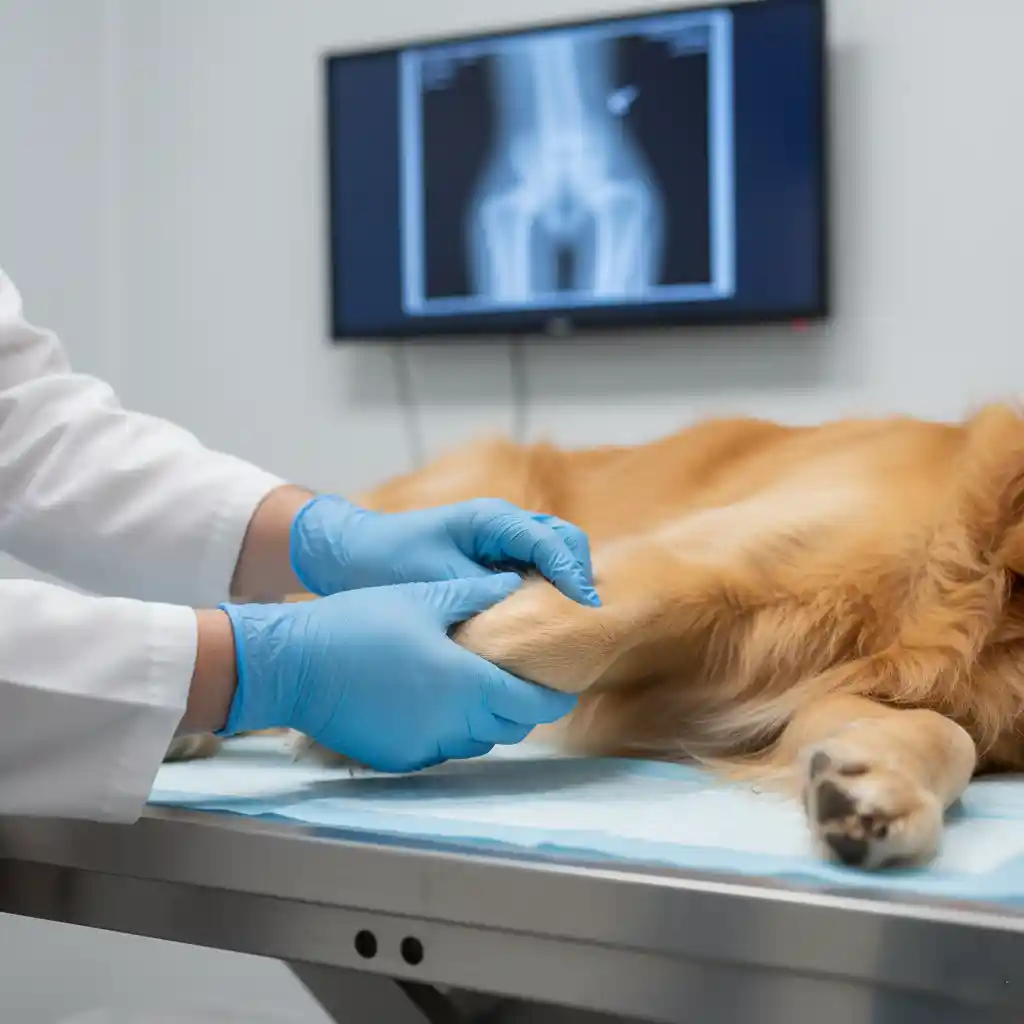
If the limp does not improve after 24 hours of rest, or if the dog is holding the leg up, you need a diagnosis. A vet will perform a Cranial Drawer Test (manipulating the knee to check for sliding) to confirm the injury.
The Financial Reality: Surgery Costs & Insurance
(Note: This section addresses high-value search queries regarding financial planning for pet owners.)
1. The Cost of Treatment (National Average)
Treating a CCL tear is one of the most expensive unexpected costs a pet owner faces. Prices vary by region and surgeon board certification.
-
Conservative Management (Non-Surgical): $500 – $1,500. Includes X-rays, pain medication, braces, and physical therapy. (Success rate is lower for dogs over 30 lbs).
-
Lateral Suture Stabilization: $1,500 – $2,500. Often recommended for small dogs (<20 lbs). A fishing-line type material stabilizes the joint.
-
TPLO (Tibial Plateau Leveling Osteotomy): $3,500 – $5,500 per knee. The Gold Standard for medium to large dogs. Involves cutting the bone and installing a metal plate.
-
TTA (Tibial Tuberosity Advancement): $3,000 – $4,500. An alternative bone-cutting procedure.
2. Pet Insurance & The “Waiting Period” Trap
If you already have pet insurance, congratulations. Most comprehensive plans cover CCL injuries up to 80-90%.
However, if you are buying insurance after the limp starts, be aware of these clauses:
-
Pre-existing Conditions: No policy covers an injury that showed symptoms before the policy started.
-
Orthopedic Waiting Periods: Many policies have a specific 6-month waiting period for cruciate ligaments, separate from the standard 14-day illness wait.
-
Bilateral Exclusions: If your dog tore the left knee before insurance, many providers will exclude the right knee from coverage, assuming it is pre-existing degeneration.
Frequently Asked Questions
Q: Can a dog recover from a torn ACL without surgery?
A: Generally, no, especially for dogs over 30 lbs. While scar tissue can stabilize the knee eventually, the instability usually leads to severe arthritis and meniscal tears. Small dogs (under 15 lbs) have a better chance of recovering with strict rest and braces.
Q: If one knee tears, will the other one tear?
A: Statistically, yes. Studies show that 40-60% of dogs who tear one CCL will tear the other one within 1-2 years. This is due to the degenerative nature of the condition and the extra weight placed on the “good” leg.
Q: Is TPLO surgery worth the high cost?
A: For active, large-breed dogs, veterinary surgeons overwhelmingly recommend TPLO. It offers the fastest return to full function and minimizes the development of long-term arthritis compared to other methods.
Manager’s Insight: The “Bilateral” Budget Shock
Let’s talk about the number that keeps me up at night: 60%.
That is the likelihood that if your dog tears one knee, they will tear the other.
If you are facing a $4,000 TPLO surgery bill today, you need to mentally prepare for another $4,000 bill next year. This is why I aggressively tell puppy owners: Get insurance immediately. If you don’t have insurance and your dog is currently healthy, get it now. Once that first limp appears, the “Pre-existing” stamp will haunt you forever.
Scientific References
-
American College of Veterinary Surgeons (ACVS). Cranial Cruciate Ligament Disease. (The gold standard definition of the disease).
-
Witsberger, T. H., et al. (2008). Prevalence of and risk factors for hip dysplasia and cranial cruciate ligament deficiency in dogs. JAVMA.
-
Kowaleski, M. P., et al. (2012). Veterinary Surgery: Small Animal. (Comparison of TPLO vs. Lateral Suture).