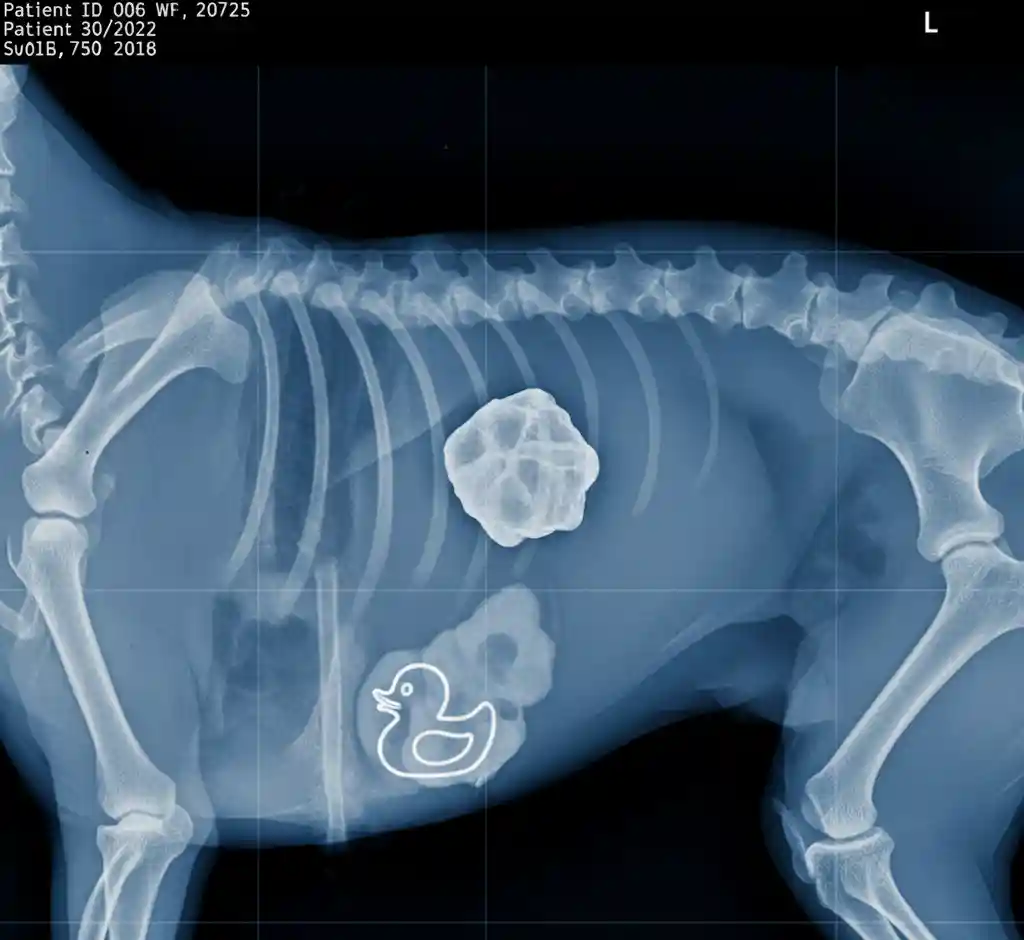
Medical Disclaimer: This content is for informational purposes only and is not a substitute for professional veterinary advice. Gastrointestinal obstruction is a life-threatening emergency. If your dog is vomiting repeatedly, has a painful abdomen, or is lethargic, go to an Emergency Vet immediately. Do not wait.
The Science: Why “Waiting It Out” Can Be Fatal
“He’ll probably just poop it out, right?”
This is the most dangerous question a pet owner can ask. While small, smooth objects may pass, larger or irregular items (like socks, corn cobs, or squeakers) can get stuck in the intestines.
The Pathophysiology of a Blockage:
When an object lodges in the intestinal tract, it creates a dam.
-
Pressure Buildup: Gas and fluid build up behind the blockage, causing extreme pain and bloating.
-
Cut-off Blood Supply: The pressure compresses the blood vessels in the intestinal wall. The tissue begins to die (necrosis).
-
Perforation & Sepsis: If untreated, the dead tissue tears, leaking bacteria and waste into the abdomen (Peritonitis). This leads to septic shock and is often fatal within hours.
Symptom Checker: Upset Stomach vs. Total Blockage
It can be hard to tell if your dog just ate something gross or if they are obstructed. Here is the clinical differentiation.
| Symptom | Mild Gastritis (Upset Tummy) | Intestinal Blockage (Emergency) |
| Vomiting | Occasional (1-2 times). May contain food/bile. | Repetitive & Projectile. Nothing stays down, not even water. |
| Stool | Diarrhea or soft stool. | Absent. Straining to poop but producing nothing (or only small amounts of bloody jelly). |
| Appetite | Might skip a meal but shows interest in high-value treats. | Total Anorexia. Refuses even favorite foods. |
| Pain Level | Mildly uncomfortable. | “Prayer Position” (front legs down, butt up). Groaning when lifted. Abdomen feels hard. |
| Energy | Slightly tired. | Extreme Lethargy. Collapse or unwillingness to move. |
Home Care vs. Vet Care
When to Attempt Home Care:
If you saw your dog swallow a small, smooth object (like a marble) less than 2 hours ago, and they are acting 100% normal.
-
Action: Call your vet immediately. They might advise you to induce vomiting (using Hydrogen Peroxide), but NEVER do this without specific dosage instructions from a professional. Inducing vomiting for sharp objects or batteries can cause more damage coming up.
When to Run to the ER:
If you did not see them eat it, but they are vomiting repeatedly. Or if the object was sharp, toxic (batteries), or long (linear foreign body like ribbon/thread).
-
Action: Do not feed them. Go to the vet for X-rays.
The Financial Reality: Surgery Costs & Insurance Rules
(Note: This section targets high-value queries regarding emergency veterinary finance.)
1. The Cost of Treatment (National Average)
The price depends heavily on how the object is removed and your location.
-
Induced Vomiting (Vet Clinic): $100 – $300. If caught early (within 1-2 hours).
-
Endoscopy (Non-Surgical): $1,500 – $2,500. A camera with a grabber tool goes down the throat to pull the object out. Only works if the object is still in the stomach.
-
Exploratory Laparotomy (Open Surgery): $3,000 – $7,000+. The surgeon must open the abdomen and cut into the intestines (enterotomy) or remove a section of dead bowel (resection and anastomosis).
2. Pet Insurance Coverage
-
Accident & Illness Plans: Generally cover foreign body surgery, provided the dog does not have a history of doing this before the policy started (“Pica” or history of dietary indiscretion).
-
The “Repeat Offender” Clause: Some insurers will cover the first surgery but may exclude subsequent surgeries if your dog is a chronic object-eater.
-
Prevention: Given the high cost, crate training and keeping floors clear are your best financial defenses.

Frequently Asked Questions
Q: How long does a dog have to live with a blockage?
A: Time is critical. Once the blood supply is cut off, necrosis can set in within 6 to 12 hours. If the bowel ruptures (perforates), the survival rate drops from 95% to less than 50%.
Q: Can I wait 24 hours to see if they poop it out?
A: If the dog is vomiting repeatedly, no. Vomiting causes dehydration, which complicates surgery. If the dog is acting normal and the object is small, a vet may advise monitoring, but this decision should be made by a professional, not a guess.
Q: What objects are the most dangerous?
A:
-
Linear Objects (Thread/String): These can cinch the intestines like a drawstring bag, sawing through the tissue.
-
Corn Cobs: They do not break down and are the perfect size to plug the intestine.
-
Batteries: They cause chemical burns.
Manager’s Insight: The “$5,000 Sock”
In the veterinary world, we have a nickname for Labradors and Goldens: “The Hoovers.”
I have seen owners spend their entire life savings to remove a $2 pair of socks from a dog’s stomach. The most heartbreaking part? It is 100% preventable.
If you own a “chewer,” you cannot trust them. Ever. Crate them when you aren’t watching. And if you are relying on luck instead of pet insurance, please check your savings account today. Can you withdraw $5,000 cash tonight? If not, look into a policy.
Scientific References
-
Hayes, G. (2009). Gastrointestinal foreign bodies in dogs and cats: a retrospective study of 208 cases. Journal of Small Animal Practice.
-
Boag, A. K., et al. (2005). Acid-base and electrolyte abnormalities in dogs with gastrointestinal foreign bodies.
-
Merck Veterinary Manual. Gastrointestinal Obstruction in Small Animals.