Nutritional Disclaimer: This recipe is a TREAT ONLY. It is high in calories and should constitute no more than 10% of your dog’s daily caloric intake. While the ingredients are generally safe, some dogs are strictly lactose intolerant. Introduce in small amounts.
Nutritional Analysis: The Lactose Logic
Why can’t we just share our vanilla cone? Two reasons: Sugar and Lactose. Adult dogs naturally lose the enzyme (lactase) needed to digest milk sugars, leading to gas and diarrhea.
However, we can bio-hack this dessert using Greek Yogurt.
-
Plain Greek Yogurt: During the straining process, much of the lactose (whey) is removed. It is also packed with Probiotics (live cultures like Lactobacillus) which support the gut microbiome, and Calcium for bone density.
-
Natural Peanut Butter: A source of healthy monounsaturated fats and Vitamin E. It acts as the high-value flavor driver.
-
Bananas: Provide potassium and natural sweetness, eliminating the need for processed sugars. They also create the creamy “ice cream” texture when frozen.
The Recipe: 3-Ingredient Peanut Butter & Banana Frozen Yogurt
Yields: 4-6 servings (depending on mold size)
Prep Time: 5 Minutes
Freeze Time: 4 Hours
Total Time: 4 Hours 5 Minutes
Ingredients:
-
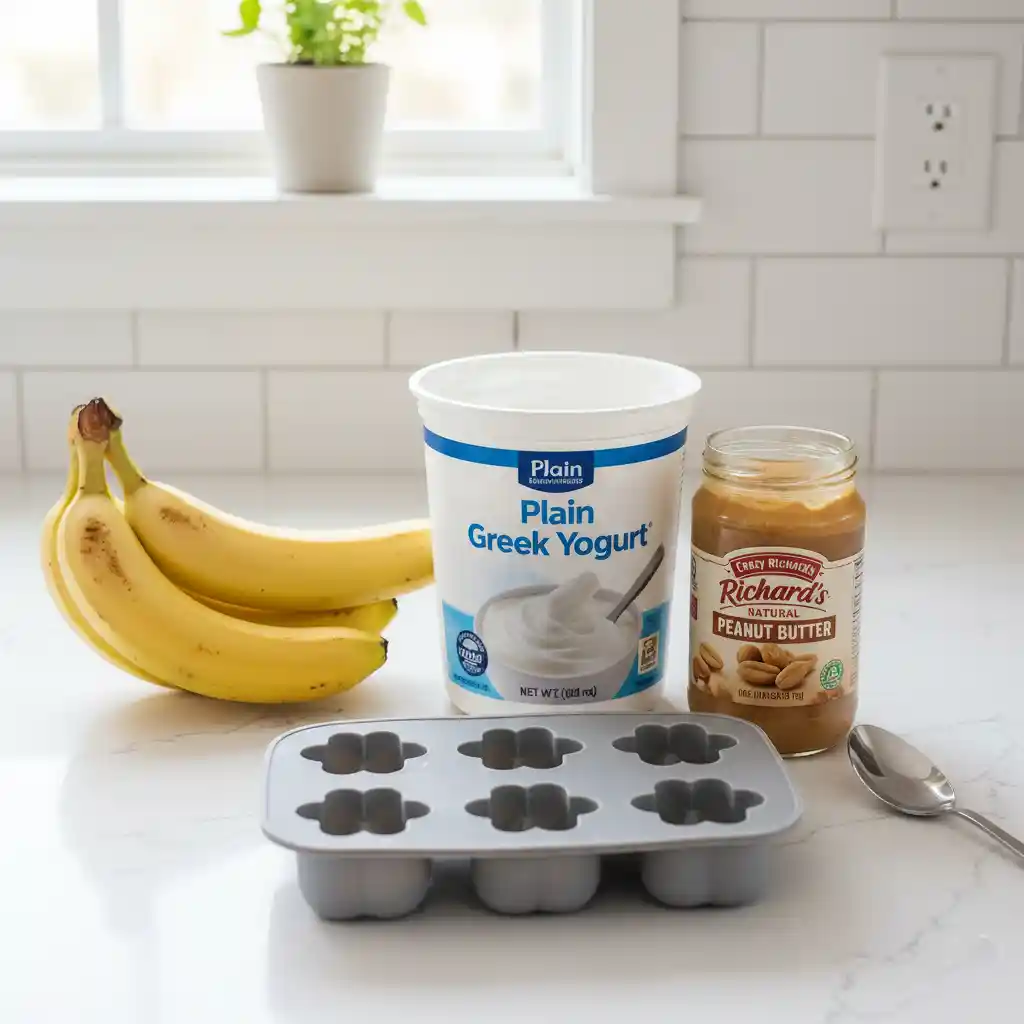
1 Cup Plain Greek Yogurt: Must be Unsweetened and Unflavored. (Look for “Live Active Cultures” on the label).
-
1 Ripe Banana: The browner, the better (softer and sweeter).
-
2 tbsp Natural Peanut Butter: Creamy, unsalted, and ABSOLUTELY NO XYLITOL.
-
Optional: A few blueberries for antioxidants.
Instructions:
-
Mash: In a medium bowl, mash the banana with a fork until it becomes a smooth paste with no large lumps.
-
Mix: Add the peanut butter and mix vigorously with the banana until combined.
-
Fold: Gently fold in the Greek Yogurt. Do not over-mix if you want a “swirl” effect, or mix completely for a uniform color.
-
Pour: Spoon the mixture into silicone molds (paw prints are popular), an ice cube tray, or small paper cups.
-
Freeze: Place in the freezer for at least 4 hours until solid.
-
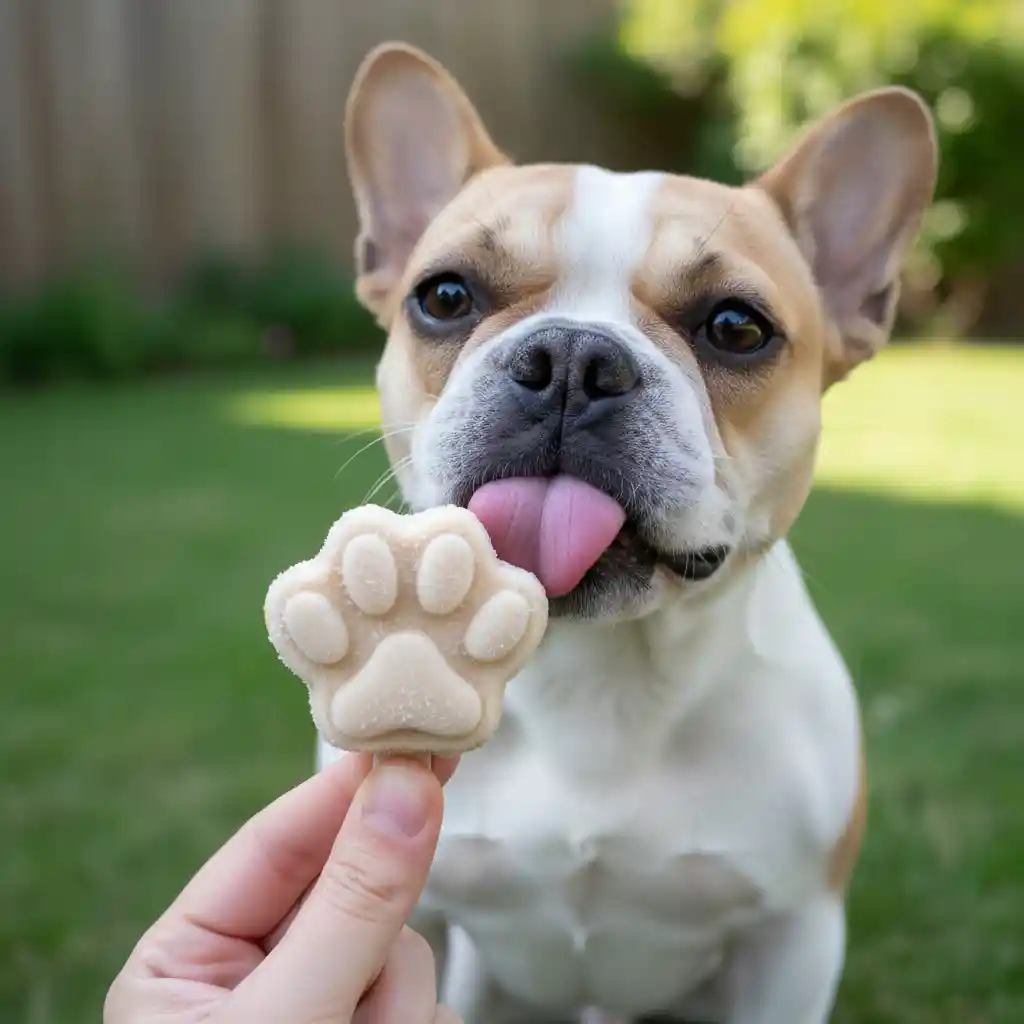
Serve: Remove one “pop” from the mold. Let it sit on the counter for 2-3 minutes to soften slightly before giving it to your dog (to prevent tongue sticking).
The “Ice Cream” Safety Audit
Human ice cream aisles are a minefield for dogs. Here is what to watch for when sourcing ingredients.
| Ingredient | Status | Why? / The Risk |
| Xylitol (Birch Sugar) | ☠️ DEADLY | Found in “Skinny,” “Keto,” or “Sugar-Free” ice creams and peanut butters. Causes rapid liver failure. |
| Chocolate / Cocoa | ☠️ TOXIC | Contains Theobromine. Never use chocolate ice cream or chocolate chips. |
| Macadamia Nuts | ☠️ TOXIC | Often found in fancy ice creams. Causes tremors, hyperthermia, and weakness. |
| Cow’s Milk (Whole) | ⚠️ CAUTION | High lactose content. Likely to cause gas and diarrhea in adult dogs. |
| Greek Yogurt (Plain) | ✅ SAFE | Lower lactose, high protein. The safest dairy option. |
| Goat’s Milk | ✅ SAFE | Easier to digest than cow’s milk due to A2 casein protein structure. |
Frequently Asked Questions
Q: Can dogs get “brain freeze”?
A: Yes. If a dog swallows a large chunk of ice cream too fast, the rapid cooling of the blood vessels in the throat can cause a headache reaction. This is why we recommend licking, not biting. Holding the cup for them helps regulate the speed.
Q: How often can I feed this?
A: Once or twice a week. Even healthy fats (peanut butter) are calorie-dense. Overfeeding can lead to pancreatitis or obesity.
Q: My dog is allergic to dairy. What can I use?
A: Substitute the Greek Yogurt with Unsweetened Coconut Milk (canned) or just use pureed 100% Pumpkin. Both freeze well and provide a creamy texture without the lactose.
Q: Is “Vanilla Extract” safe to add for flavor?
A: Generally, no. Most vanilla extracts have a high alcohol content. While the amount in a drop is small, it is unnecessary. Dogs prefer the smell of the peanut butter or fruit anyway.
Manager’s Insight: The “Calorie Bomb”
Here is the nutritionist’s reality check: Liquid calories count.
I often see owners who are strict with kibble portions but then give a massive “pup cup” or frozen treat after a walk. A tablespoon of peanut butter has about 95 calories. For a 10lb dog, that is nearly 25% of their daily energy requirement.
If you give this treat, you must reduce their dinner portion slightly. Balance is not just about nutrients; it’s about energy in vs. energy out. Don’t let “love” turn into obesity.
Scientific References
-
Beynen, A. C. (2017). Lactose digestion in dogs. (Explaining the mechanics of lactose intolerance).
-
Murphy, L. A., & Dunayer, E. K. (2018). Xylitol toxicosis in dogs: An update. Veterinary Clinics: Small Animal Practice.
-
National Research Council (NRC). Nutrient Requirements of Dogs and Cats. (Caloric density of fats).