Safety Note: This guide contains affiliate links. If you purchase a ramp through our links, we may earn a commission at no extra cost to you. We only recommend products that meet strict safety criteria for stability and grip.
The “Micro-Trauma” of the Bedroom Jump
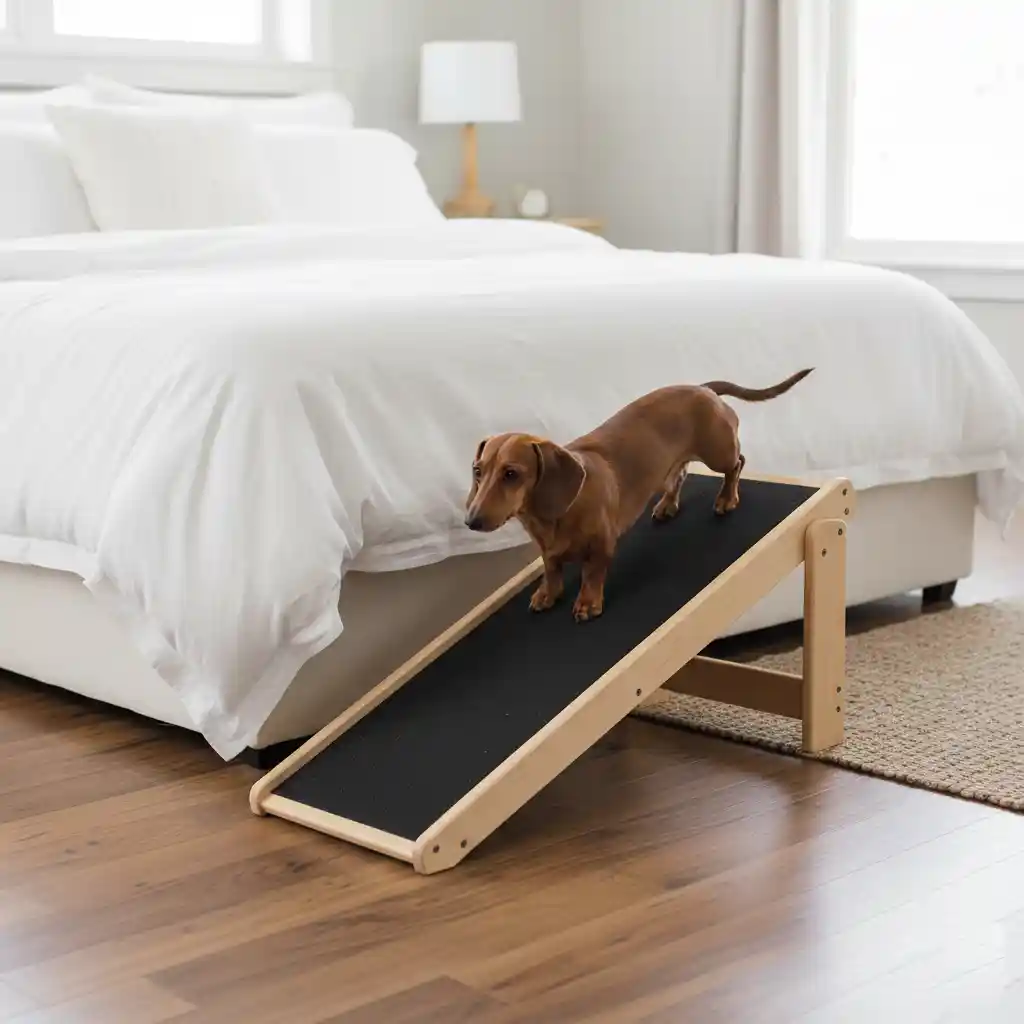
We love letting our dogs sleep on the bed. But for a small dog, jumping off a 25-inch high mattress is the equivalent of a human jumping off a one-story building.
Doing this once is fine. Doing it 10 times a day for 5 years creates Micro-Trauma.
For breeds prone to IVDD (Frenchies, Dachshunds) or seniors with arthritis, this repetitive impact compresses the spinal discs and inflames the joints.
The solution is simple: Stop the jump. But should you buy Stairs or a Ramp?

The Verdict: Stairs vs. Ramps
While stairs are cheaper and take up less space, physics tells us they are not the best choice for spinal health.
| Feature | Pet Stairs (Steps) | Dog Ramps (Incline) |
| Spinal Impact | ⚠️ Moderate. The dog still has to shift weight abruptly with each step. | ✅ Zero. A smooth, continuous motion with no impact shocks. |
| Suitability for IVDD | ❌ Risk. Navigating steps requires spinal flexion (bending). | ✅ Best. Keeps the spine neutral and straight. |
| Learning Curve | Easy (Natural movement). | Moderate (Requires training/treats). |
| Space Required | Compact. | Large (Needs runway length). |
| Winner | Good for healthy, agile cats or large dogs. | Must-have for Dachshunds, Corgis, and Arthritic Seniors. |
3 Critical Features to Look For (Don’t Buy Junk)
There are hundreds of cheap ramps on Amazon. Most are dangerous wobbling hazards. As a researcher, here are the non-negotiable criteria I look for:
1. High-Traction Surface (No Carpet!)
-
The Problem: Many cheap ramps use slippery carpet. If a dog slips, they panic and jump off, causing the exact injury you tried to prevent.
-
The Solution: Look for Rubberized Grip (like a yoga mat texture) or High-Grit Sandpaper finishes. This provides “paw traction” so the dog feels secure.
2. Adjustable Gradient (The Slope)
-
The Problem: A ramp that is too steep is just a slide.
-
The Solution: Look for a ramp with telescoping legs or multiple notches. You want the angle to be 18 to 25 degrees. Anything steeper than 30 degrees puts too much pressure on the hips.
3. Side Rails (Safety Guard)
-
The Problem: Dogs are clumsy.
-
The Solution: For blind or senior dogs, raised edges (guard rails) are essential to prevent them from stepping off the side.
(Note: In this section, you would insert your Affiliate Links / Amazon Native Shopping Ads)
Top Category Recommendations
1. The “Gold Standard” for High Beds
-
Type: Adjustable Wooden Ramp with High-Traction Mat.
-
Why we like it: These are furniture-grade pieces. They are heavy (won’t tip over), have adjustable heights up to 30 inches, and use a specialized rubber surface that creates zero slip.
-
Best for: Dachshunds and Post-Surgery Recovery.
2. The Budget-Friendly Couch Option
-
Type: High-Density Foam Wedge.
-
Why we like it: Unlike hard plastic stairs, a “Scalloped” foam ramp is soft. If the dog hits it, they won’t get bruised. It’s lightweight and easy to move for vacuuming.
-
Best for: Puppies and small Toy Breeds (Chihuahuas).
3. The “Traveler”
-
Type: Bi-Fold Plastic Ramp.
-
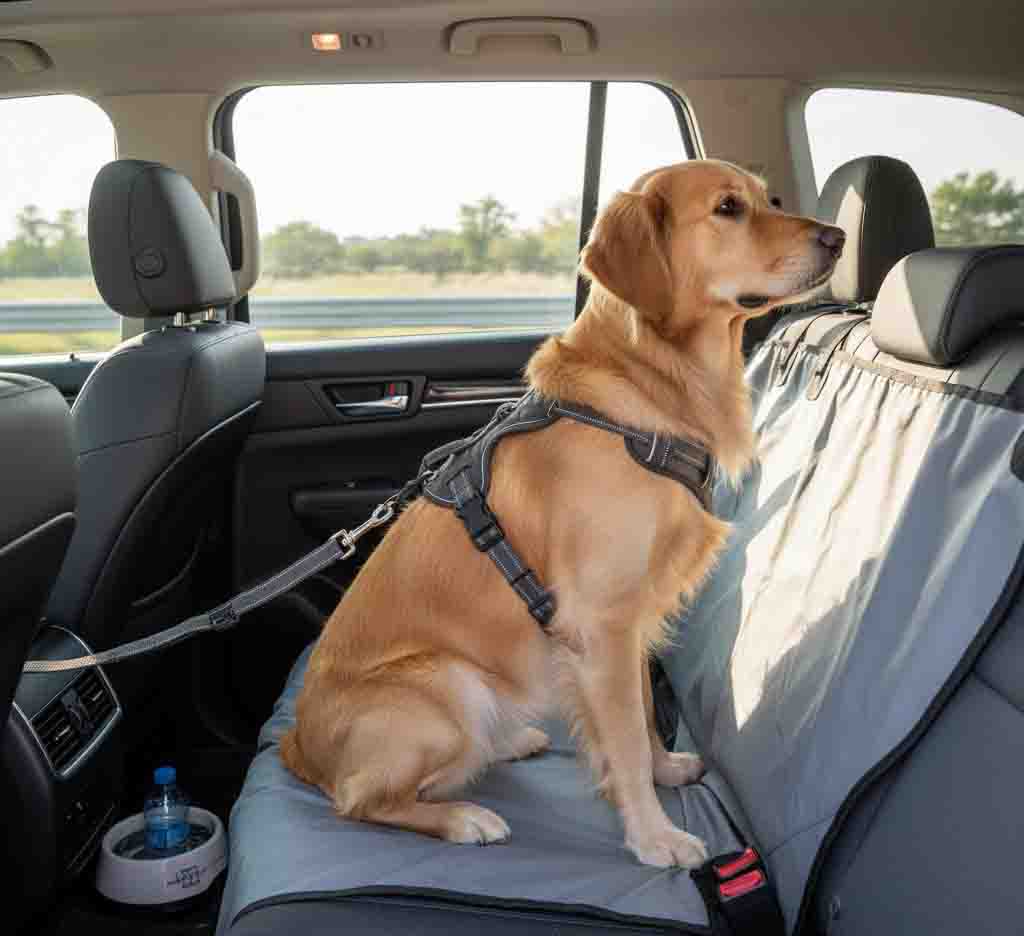
Why we like it: Essential for getting large dogs into SUVs. Look for one that weighs under 10 lbs but supports 150 lbs.
-
Best for: Golden Retrievers with hip dysplasia.
How to Train Your Dog to Use It (Don’t Force It!)
If you buy a ramp and shove your dog onto it, they will hate it forever.
The “Cookie Trail” Method:
-
Flat First: Lay the ramp flat on the floor. Lure your dog across it with treats. Let them get used to the texture.
-
Low Incline: Prop it up just a few inches. Place a treat on the bottom, middle, and top.
-
The Bed: Set it up at the bed. Block the other side. Use pillows or laundry baskets to block the “jumping zone” so the ramp is the only way up.
-
Reward: Big party every time they use it.
Frequently Asked Questions
Q: My bed is very high (30 inches+). Will a ramp work?
A: Yes, but you need a Long Ramp. Physics dictates that to reach a high point without being too steep, the ramp must be long (60-70 inches). Measure your bedroom space first to ensure you have room for the “runway.”
Q: Are foam ramps better than plastic?
A: For indoor use, High-Density Foam is superior. It is silent (no clanking noise), soft on the paws, and provides better grip than cheap plastic molding.
Q: Can I build my own?
A: You can, but traction is usually the failure point for DIY ramps. Buying a specialized rubber matting is key. A slick painted wood ramp is dangerous.
Manager’s Insight: The “Prevention” Math
Let’s look at the ROI (Return on Investment).
A high-quality, ugly, furniture-grade ramp costs about
150∗∗.Aspinalsurgeryforaruptureddisccosts∗∗8,000.
The ramp is cheaper.
bAlso, don't wait until your dog is 12 and limping. Training a 12-year-oldlind dog to use a new ramp is a nightmare. Train them when they are 2, and it will be second nature by the time they need it.
Affiliate Disclosure: By clicking on the product images or links on this page, you will be redirected to Amazon. As an Amazon Associate, we earn from qualifying purchases made through these links. This comes at no extra cost to you and helps support our site’s content.