Electrical Safety Warning: Check the cord. If your cat or puppy is a “cord chewer,” look for a fountain with a metal-wrapped cord or a battery-operated wireless model. Electrocution risk is real with cheap pumps.
The Mystery of the “Dirty Chin”
You’re scratching your cat’s chin and you notice black specks. It looks like dirt, but it won’t wipe off.
Congratulations, you’ve met Feline Acne.
Before you run to the vet for expensive creams, look at your water bowl. Is it plastic?
If yes, throw it away. Right now.
Plastic is porous. Over time, it develops microscopic scratches that you can’t see. These scratches become condos for bacteria. No matter how hard you scrub, you cannot clean inside those cracks. Every time your cat drinks, their chin rubs against this bacterial colony, causing acne.
The solution isn’t medication; it’s Stainless Steel.
The “Running Water” Instinct: Saving Kidneys
Beyond acne, there is a bigger killer: Chronic Kidney Disease (CKD).
Cats have a notoriously low thirst drive. In nature, they get moisture from prey. In your house, eating dry kibble, they are chronically dehydrated.
Why won’t they drink from a bowl?
Because in the wild, standing water = stagnant/poison.
Running water = fresh/safe.
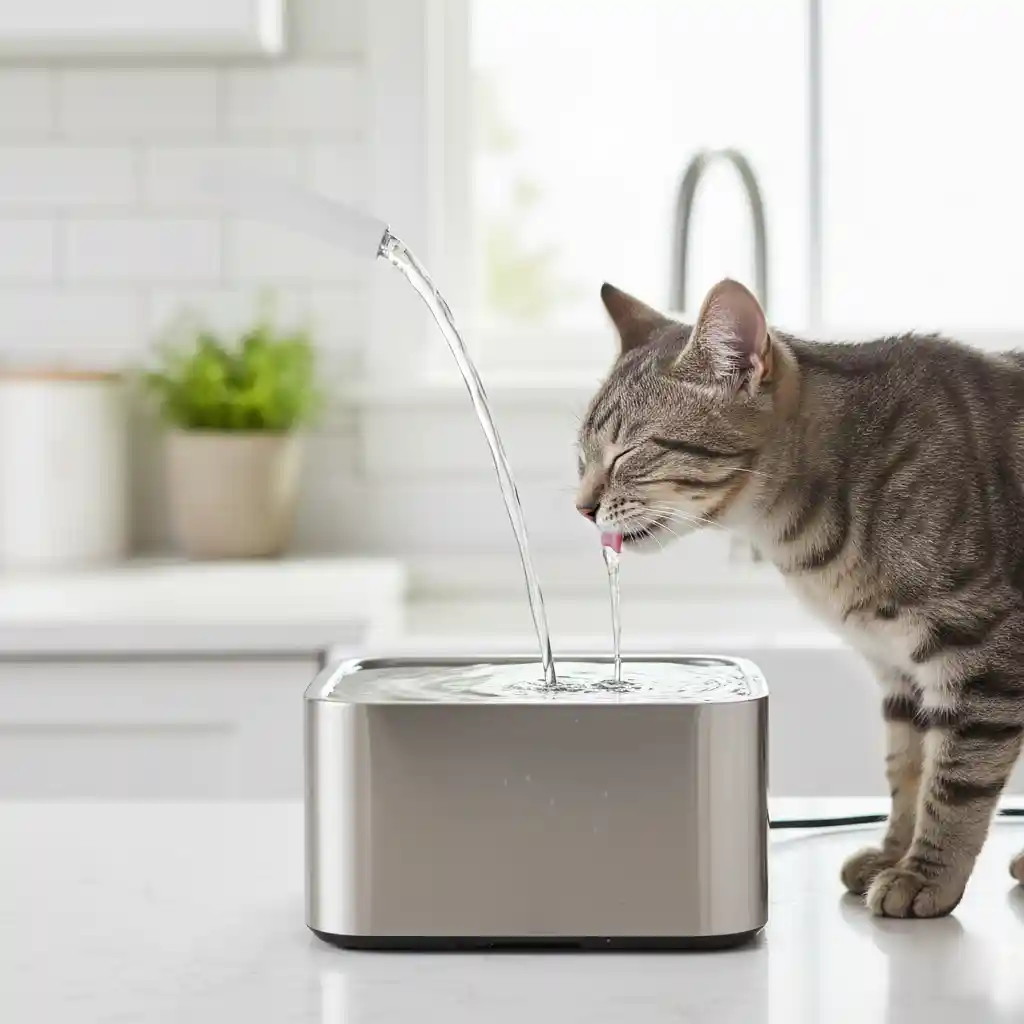
A fountain isn’t a luxury; it triggers a biological instinct to drink. By switching to a fountain, you are actively flushing their kidneys and preventing crystals (FLUTD).
Plastic vs. Ceramic vs. Stainless Steel
Why is steel the gold standard?
| Feature | Plastic | Ceramic | Stainless Steel (304) |
| Hygiene | ❌ Poor. Scratches easily, harbors bacteria (Biofilm). | ⚠️ Okay. Safe if glazed properly, but develops micro-cracks over time. | ✅ Best. Non-porous. Biofilm slides right off. |
| Durability | Low. Absorbs odors. | Moderate. breaks if dropped. | High. Indestructible. |
| Acne Risk | High. | Moderate. | Zero. |
| Cleaning | Hand wash mostly. | Dishwasher safe (heavy). | Dishwasher safe (easy). |
| Verdict | Avoid. | Good for style. | Best for health. |
3 Features That Make or Break a Fountain
I have tested dozens of fountains. Most end up in the trash because they are a nightmare to clean. Here is what to look for:
1. The “Open Top” Design
-
The Problem: Many fountains (“Flower” style) have a lid. You can’t see how much water is left until the pump burns out dry.
-
The Solution: Look for an Open Basin design. It allows your cat to drink even if the power goes out (no water trapped inside), and you can visibly check the water level instantly.
2. Dishwasher Safe (Everything)
-
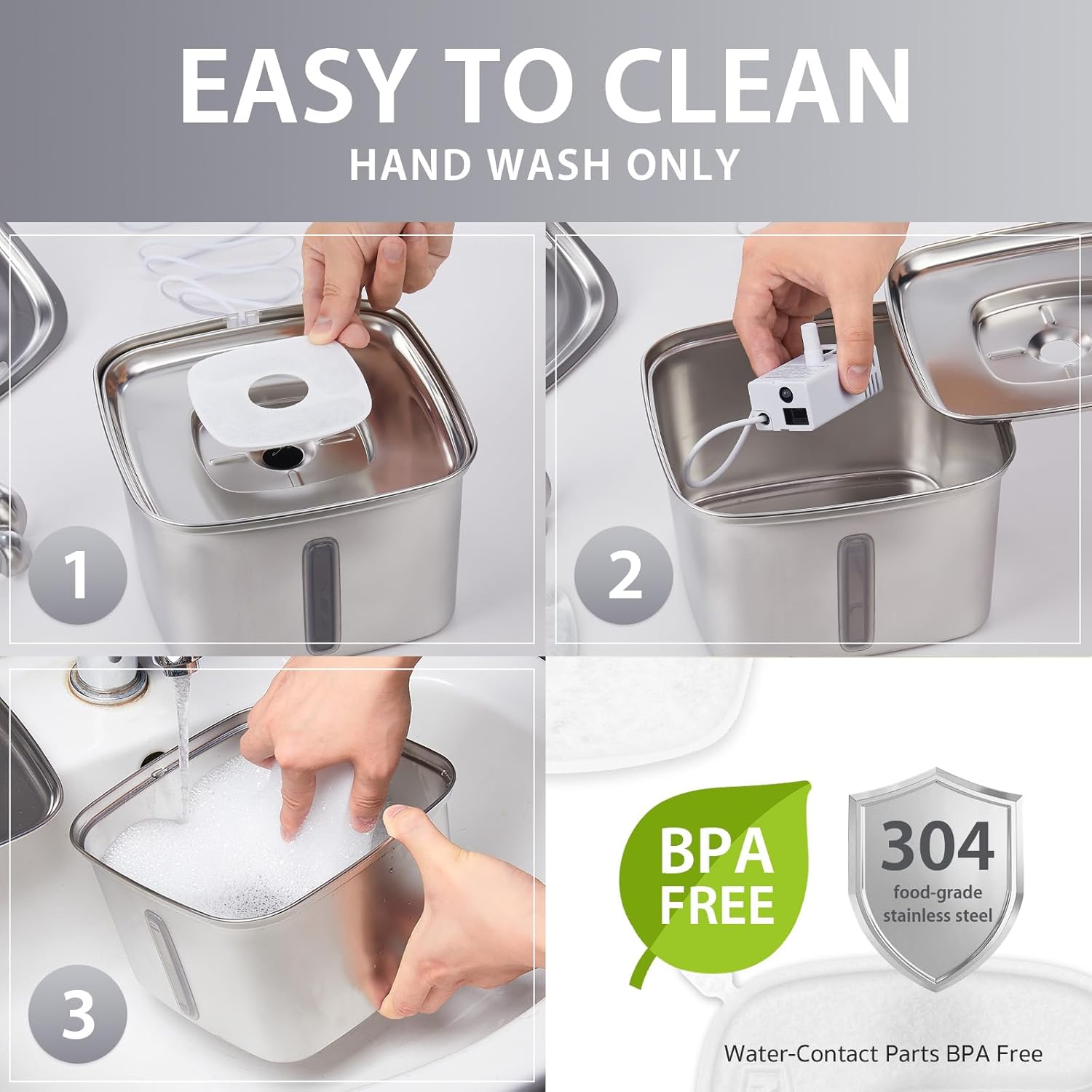
The Requirement: If you have to hand-scrub nooks and crannies with a toothbrush every week, you will stop doing it.
-
The Standard: The entire top and bowl should be 304 Stainless Steel that you can toss in the dishwasher.
3. The Pump Placement
-
The Evolution: Older fountains have cords dangling in the water.
-
The Upgrade: Look for “Wireless Pump” technology. This doesn’t mean battery-only; it means the pump sits on a magnetic base (like a wireless phone charger). There are no cords in the water to get slimy.
Top Category Recommendations
1. The “Hygiene King” (Wireless Pump)
-
Type: 304 Steel with Magnetic Induction Pump.
-
Why we like it: Zero wires in the water. You just lift the tank off the base to fill it. Cleaning takes 30 seconds. Extremely quiet (under 30dB).
-
Best for: The busy owner who hates scrubbing.
2. The “Faucet” Lover
-
Type: Swan Neck or Arc Spigot Design.
-
Why we like it: Some cats refuse to drink from a flat surface; they want the “kitchen tap” experience. This mimics that stream perfectly without wasting tap water.
-
Best for: Picky cats who jump on the sink counter.
3. The “Battery Operated” (No Cords)
-
Type: Motion Sensor Battery Fountain.
-
Why we like it: You can place it anywhere (hallway, porch) without needing a plug. The motion sensor saves battery by only turning on when the cat approaches.
-
Best for: Apartments with limited outlets or cord-chewing pets.
Frequently Asked Questions
Q: How often do I need to change the filters?
A: Manufacturers say “every 2 weeks,” but honestly, it depends on the number of pets. For one cat, every 3-4 weeks is fine. However, you must rinse the foam pre-filter weekly to stop hair from clogging the pump.
Q: Why is my fountain making a grinding noise?
A: It’s thirsty! That noise is the pump sucking air. Fill it up immediately. If it still makes noise, hair is wrapped around the impeller. Take the pump apart and clean it.
Q: Do stainless steel fountains rust?
A: True 304 stainless steel should not rust. If you see “rust,” it is usually hard water mineral deposits (lime scale). Soak it in white vinegar for 20 minutes, and it will wipe right off.
Manager’s Insight: The “Slime” Check
Go to your current water bowl. Run your finger along the inside rim.
Does it feel slippery? Like a thin layer of gel?
That is Biofilm. It’s a protective city built by bacteria (like E. coli and Salmonella) to shield themselves.
If you feel slime, simply rinsing the bowl does nothing. You are just giving the bacteria a bath. You need to scrub it with soap and hot water.
Stainless steel fountains are not magic—they still get slime—but because the surface is smooth (non-porous), the slime wipes off effortlessly. With plastic, the slime digs into the scratches and stays there forever. Make the switch.
Affiliate Disclosure: By clicking on the product images or links on this page, you will be redirected to Amazon. As an Amazon Associate, we earn from qualifying purchases made through these links. This comes at no extra cost to you and helps support our site’s content.