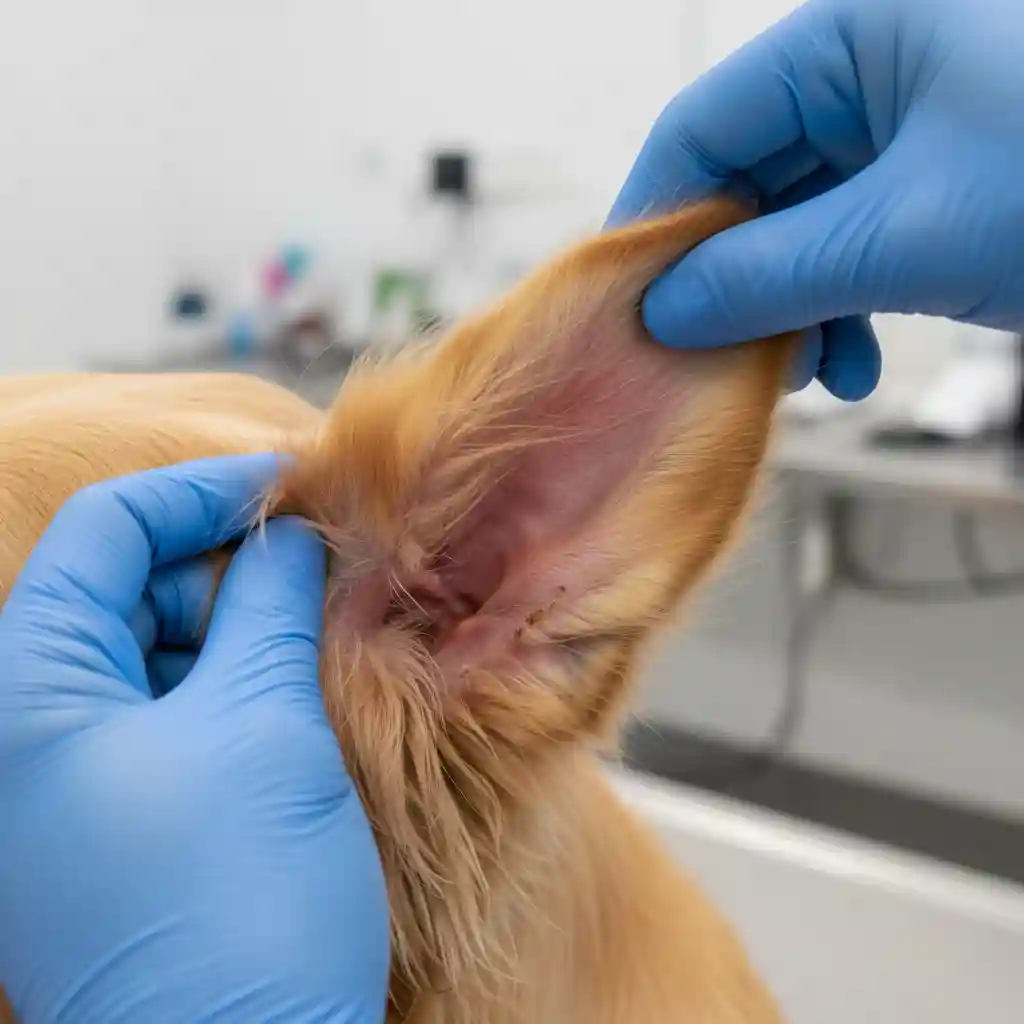
Medical Disclaimer: This content is for informational purposes only and does not substitute professional veterinary advice. Self-treating ear infections without a proper diagnosis can worsen the condition or lead to permanent damage. If your dog is in pain, has discharge, or is shaking their head excessively, seek veterinary attention immediately.
The Science: The Cozy, Damp World of Dog Ears
A dog’s ear canal is shaped like an “L”—it has a vertical portion followed by a horizontal portion. This unique anatomy, combined with ear hair and wax production, creates a warm, moist environment that is ideal for bacteria and yeast to thrive.
When these normal inhabitants of the ear canal multiply uncontrollably, they cause inflammation and infection, known as Otitis Externa (outer ear infection).
Common Culprits:
-
Yeast (Malassezia): Naturally present, but overgrows when conditions are right.
-
Bacteria (Staphylococcus, Pseudomonas): Also common, but can take over if the ear’s natural defenses are compromised.
-
Allergies: The most common underlying cause. Environmental or food allergies can lead to chronic inflammation, making ears a perfect breeding ground for yeast and bacteria.
Symptom Checker: Mild Irritation vs. Serious Infection
Early detection is key to preventing pain and complications.
| Symptom Level | Clinical Signs | What it Might Mean |
| Mild Irritation | Occasional scratching or head shaking; mild redness inside the ear flap; slight odor. | Could be allergies, residual moisture, or early stage irritation. |
| Moderate Infection | Frequent scratching/shaking; redness and swelling of the ear canal; thick brown or yellowish discharge; noticeable odor; dog flinches when ear is touched. | Likely yeast or bacterial overgrowth. The ear is inflamed and painful. |
| Severe Infection / Emergency | Intense head shaking or head pressing against walls; pawing at the ear; swelling of the ear flap (hematoma); discharge that is green/bloody; inability to stand; loss of balance; deep, painful groaning. | Urgent Care Needed. Infection may have spread to the middle or inner ear, causing neurological signs or severe pain. |
Home Care vs. Vet Care
When Home Care Might Suffice (Early Stage/Prevention):
-
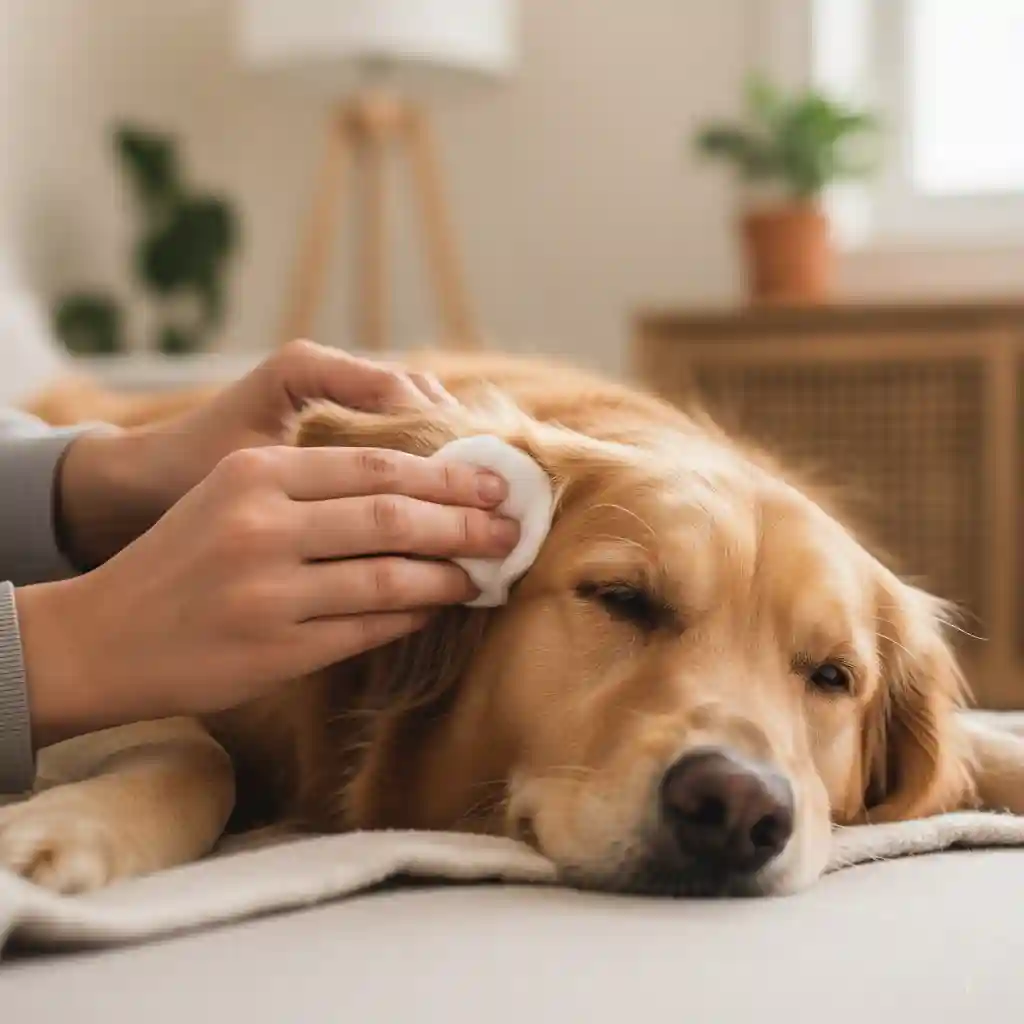
Regular Cleaning: If your dog is prone to mild wax buildup or has had issues before, once a week cleaning with a gentle, pH-balanced ear cleaner can help prevent infections. Never use cotton swabs deep in the canal.
-
Drying Ears After Swimming/Baths: Thoroughly dry the ear flaps and outer canal with a towel or cotton ball.
When You MUST See a Vet:
-
Any suspicious discharge: Green, yellow, bloody, or excessive brown discharge.
-
Strong odor: A yeasty or foul smell is a major indicator.
-
Pain or Swelling: If your dog reacts strongly when you touch their ears.
-
Persistent Head Shaking/Scratching: If symptoms don’t resolve within 24 hours of home care.
-
Any neurological signs: Head tilt, loss of balance, or circling.
The Financial Reality: Diagnosis, Treatment & Insurance
Ear infections are common, but they can become costly if not treated properly.
1. Cost of Treatment (National Average)
-
Veterinary Exam & Diagnosis: $50 – $150. Includes physical exam and otoscopic inspection.
-
Cytology (Ear Swab): $40 – $80. Microscopic examination to identify yeast/bacteria.
-
Medications (Prescription): $50 – $150 for a course of antibiotic/antifungal ear drops. Oral medications for underlying allergies may be additional.
-
Deep Cleaning (Sedated): $150 – $300. If ears are too painful or swollen for a standard exam.
-
Treating Underlying Allergies: $100s – $1,000s for diagnostic testing (allergy panels) and ongoing treatment.
2. Prevention & Insurance Coverage
-
Prevention: Regular ear checks and cleaning are vital. If allergies are suspected, working with your vet on an elimination diet or allergy testing can prevent chronic infections.
-
Insurance: Most comprehensive “Accident & Illness” plans DO cover ear infections and their underlying causes (like allergies), provided these were not pre-existing conditions at the time of policy enrollment.
-
Pro Tip: Always check your policy’s details on dermatology and allergy coverage.
-
Frequently Asked Questions
Q: Is ear infection contagious to humans or other pets?
A: Generally, no. While yeast and bacteria are normal inhabitants, an overgrowth is usually due to an individual animal’s ear environment or lowered immunity. However, it’s good practice to wash your hands after handling a dog with an active infection.
Q: How long does it take for an ear infection to clear up?
A: With appropriate veterinary treatment (medication and cleaning), most simple infections resolve within 7-14 days. Chronic or severe infections, especially those involving middle/inner ear or underlying allergies, can take months to manage.
Q: Can I use rubbing alcohol or hydrogen peroxide in my dog’s ears?
A: Absolutely not. Rubbing alcohol is toxic and extremely painful to inflamed ear canals. Hydrogen peroxide can damage ear tissues and is not pH-balanced for the ear. Stick to vet-approved ear cleaners.
Q: What happens if ear infections are left untreated?
A: Untreated infections can lead to:
-
Chronic Inflammation: Thickened ear canals.
-
Aural Hematomas: Blood vessels in the ear flap burst from constant scratching/shaking, causing a swollen, painful ear.
-
Middle/Inner Ear Infection: Can cause head tilt, loss of balance, and neurological signs.
-
Permanent Hearing Loss or Scarring.