That Awful “Horking” Sound at 3 AM. Now What?
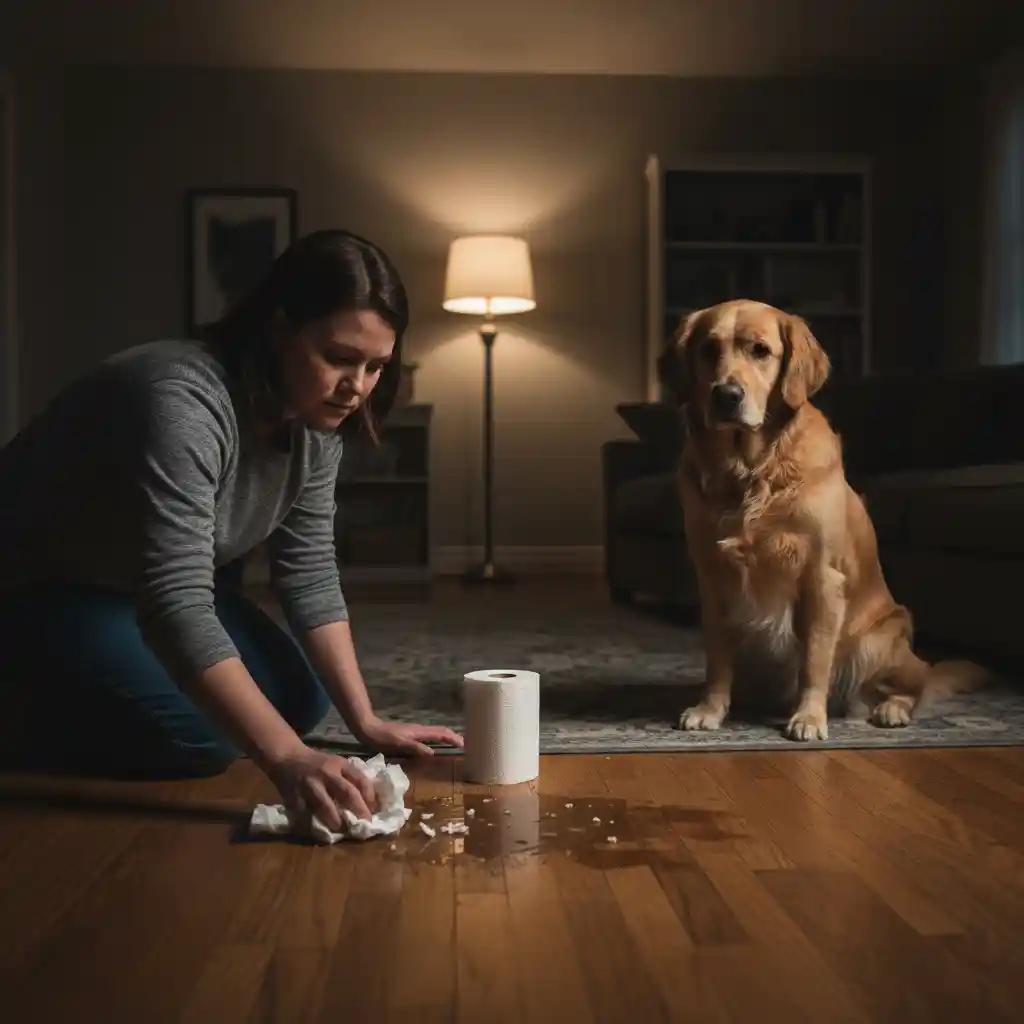
You know the sound. That deep, guttural hork-hork-hork that jolts you out of a dead sleep. You leap out of bed, fumbling for the light switch, praying they make it off the carpet.
They don’t.
You stand there, staring at the pile on the floor, and your brain goes into overdrive. Was it the new treats? Did he eat a sock? Is it bloat? Is he dying?
I’ve been there. My first instinct used to be to grab my phone and google “Why is my dog throwing up?”
I would get a list of 25 horrors, from pancreatitis to cancer.
I think this is the worst thing you can do.
After years of analyzing vet reports, I’ve realized something. Your job in that moment isn’t to become a WebMD-certified gastroenterologist.
Your job is to be an ER nurse. Your job is to Triage.
The “Adversarial” View: Stop Diagnosing, Start Observing
Let’s challenge the internet’s approach.
The Internet’s Advice: “Here are 20 possible diseases.”
My Counter-point: This is useless. You are not qualified to distinguish between them. It only creates panic.
My Advice: Forget the “why.” Focus on the “how.”
Was this a violent, abdominal event? Or was it a passive, effortless “spill”?
In simple terms: Did it come from the stomach, or did it come from the throat?
One is a Vomit. The other is Regurgitation.
One might just be an “oops.” The other can signal an emergency.
Case Study: Max the Lab vs. Daisy the Corgi
Let me illustrate with two real stories.
Max the Labrador ate his dinner in 12 seconds flat. Five minutes later, he walked over to the rug, gave a little cough-burp, and a perfect, undigested tube of kibble slid out onto the floor. He then looked at it, and tried to eat it again.
This was Regurgitation. His brainless eating meant the food never made it past his esophagus. Annoying, but not an emergency.
Daisy the Corgi was acting quiet all afternoon. Then, she started pacing. She heaved, her whole body contracting, three times. A small puddle of yellow, foamy bile came out. She heaved again, but nothing came out (“non-productive retching”).
This was Vomiting. It was a signal from her brain that something was wrong in her gut. (In her case, it was a piece of a tennis ball). This was an emergency.
Vomit vs. Regurgitation: Your 60-Second Guide
Forget the medical jargon. Just look at what happened.
| Feature | Vomit (From the Stomach) | Regurgitation (From the Throat) |
| The Action | A violent, active process. You see abdominal heaving and hear loud retching. | A passive, quiet process. The dog just lowers its head and it “spills” out. No warning. |
| The Content | Partially digested food, yellow bile, or just foam. Smells sour/acidic. | Undigested food. Looks almost exactly like it did in the bowl. |
| The Shape | A messy puddle. | Often a cylindrical or “tube” shape. |
| The Aftermath | Dog often looks sick, lethargic, or pants heavily. | Dog often acts completely normal and may try to re-eat it. |
| My Verdict | Pay Attention. This is a red flag. | Gross, but usually not an emergency. |
The “Red Line”: When to Call the ER Tonight
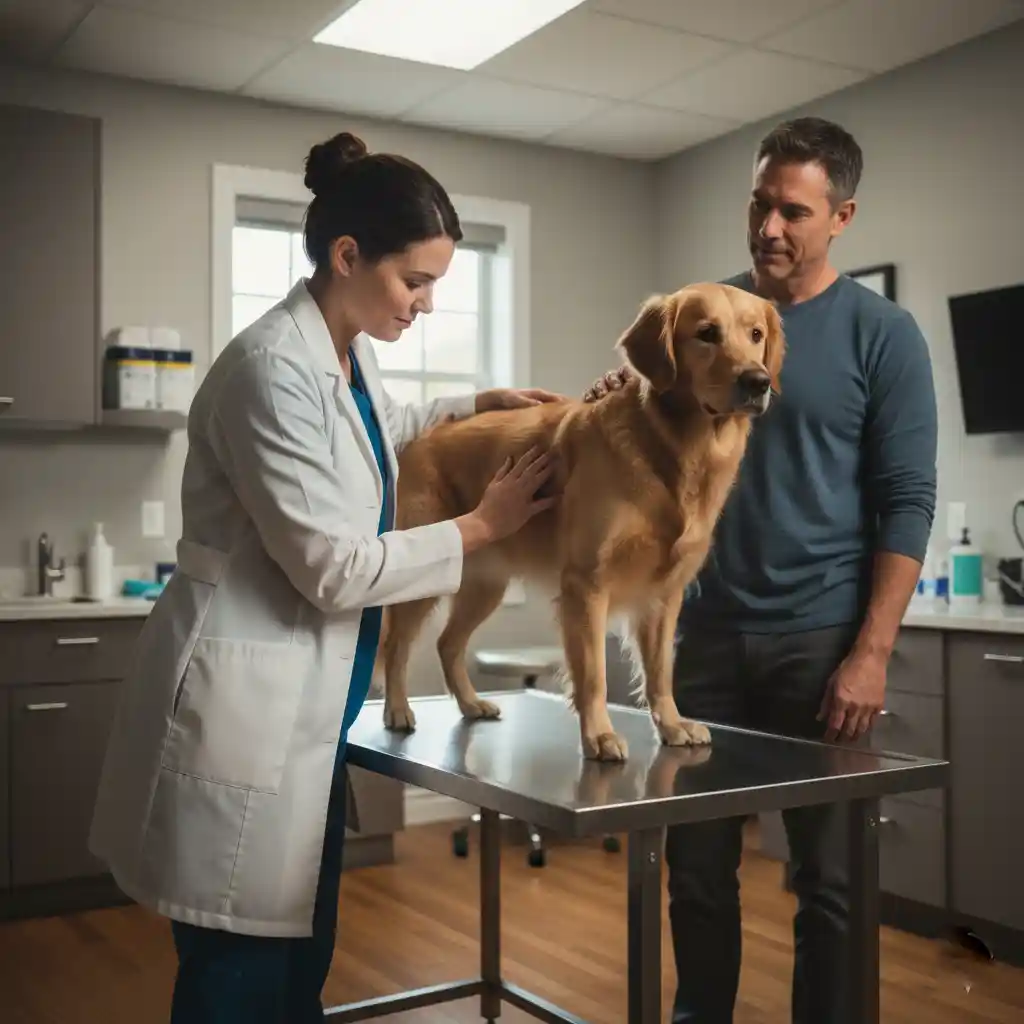
Okay, so you’ve determined it was a real vomit. Do you need to rush out the door?
Here is my personal “Red Line” checklist. If you answer “Yes” to any of these, you go. No exceptions.
-
Is it happening repeatedly? (More than 2 times in a few hours).
-
Is there blood? (Bright red or dark “coffee grounds”).
-
Is your dog trying to vomit but nothing is coming out? (This is the #1 sign of life-threatening Bloat/GDV).
-
Is your dog’s abdomen hard or bloated?
-
Is there a known toxin involved? (Grapes, chocolate, xylitol, medication).
If the answer to all of these is “No,” and your dog just vomited once but is now drinking water and acting normal? You can probably wait until the morning.
Manager’s Insight: Be a Good Witness
Expert Summary
I used to go to the vet and say, “He’s sick!” The vet would ask, “What kind of sick?” and I’d just shrug.
Stop being a panicked owner. Start being a good witness.
The next time your dog throws up, don’t just clean it. Observe it.
-
Take a picture of it.
-
Write down the time.
-
Note if it was a heave or a spill.
When you call the vet and say, “At 3:15 AM, my dog regurgitated a tube of undigested kibble without heaving,” you have just saved them 20 minutes of guesswork. You have become part of the diagnostic team.
That is your job. Not to have all the answers, but to provide all the clues.