The “Science” Hook: It’s Not Gross, It’s Evolutionary
Before you panic or feel disgusted by your furry friend, let’s look at the biology. In the wild, mother wolves consume their puppies’ waste to keep the den clean and hide their scent from predators. This is an instinctual survival mechanism called atavistic behavior.
Furthermore, a study by Dr. Benjamin Hart (UC Davis) revealed that 16% of dogs are serious stool eaters. It’s not a sign that your dog is “broken”; it’s a sign that an ancient scavenging circuit in their brain has been triggered. The goal of this guide is not to punish the dog, but to rewire that circuit.
Preparation List: The Toolkit
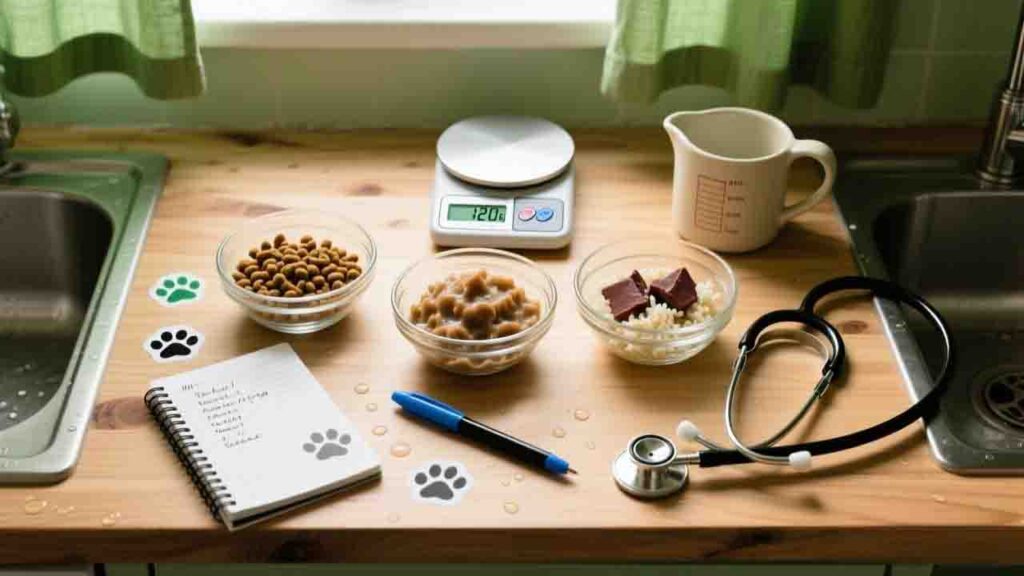
To break this habit, you need to manage the environment strictly for 3-4 weeks. You will need:
-
A 6-foot Fixed Leash: (No retractable leashes). You need precise control.
-
High-Value Treats: Ideally strong-smelling (e.g., boiled liver, cheese) to compete with the scent of waste.
-
A “Treat Pouch”: Worn on your waist for instant access.
-
Enzymatic Yard Spray: To break down old pheromones in the grass.
-
Stool Deterrent (Optional): Natural additives like zucchini or digestive enzymes (consult your vet), though training is superior to additives.
The Method: Rewiring the Potty Routine
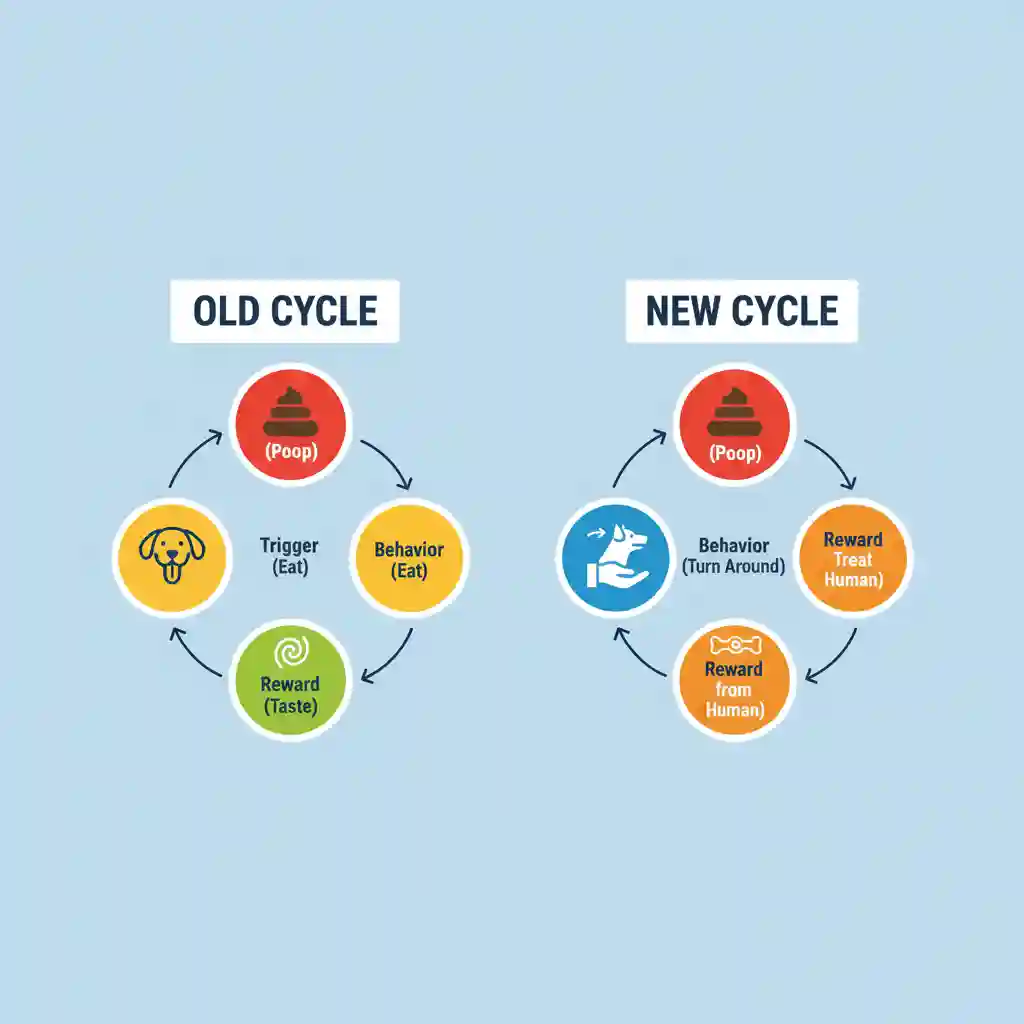
Most owners make the mistake of shouting “No!” when the dog turns around to sniff. This often scares the dog into eating it faster to “hide the evidence.” We will use Positive Replacement instead.
Step 1: The “Leashed” Potty Break (Management)
For the next 21 days, your dog is never allowed in the yard alone.
-
Go out with them on a leash.
-
Stand quietly while they find a spot. Do not distract them.
Step 2: The “Mark and Move” Technique
Timing is everything.
-
The Micro-Second: The moment your dog finishes eliminating and begins to stand up—but before they turn around to sniff—you must act.
-
The Cue: Immediately say your recall word (“Here!” or “Come!”) in a high-pitched, happy voice.
-
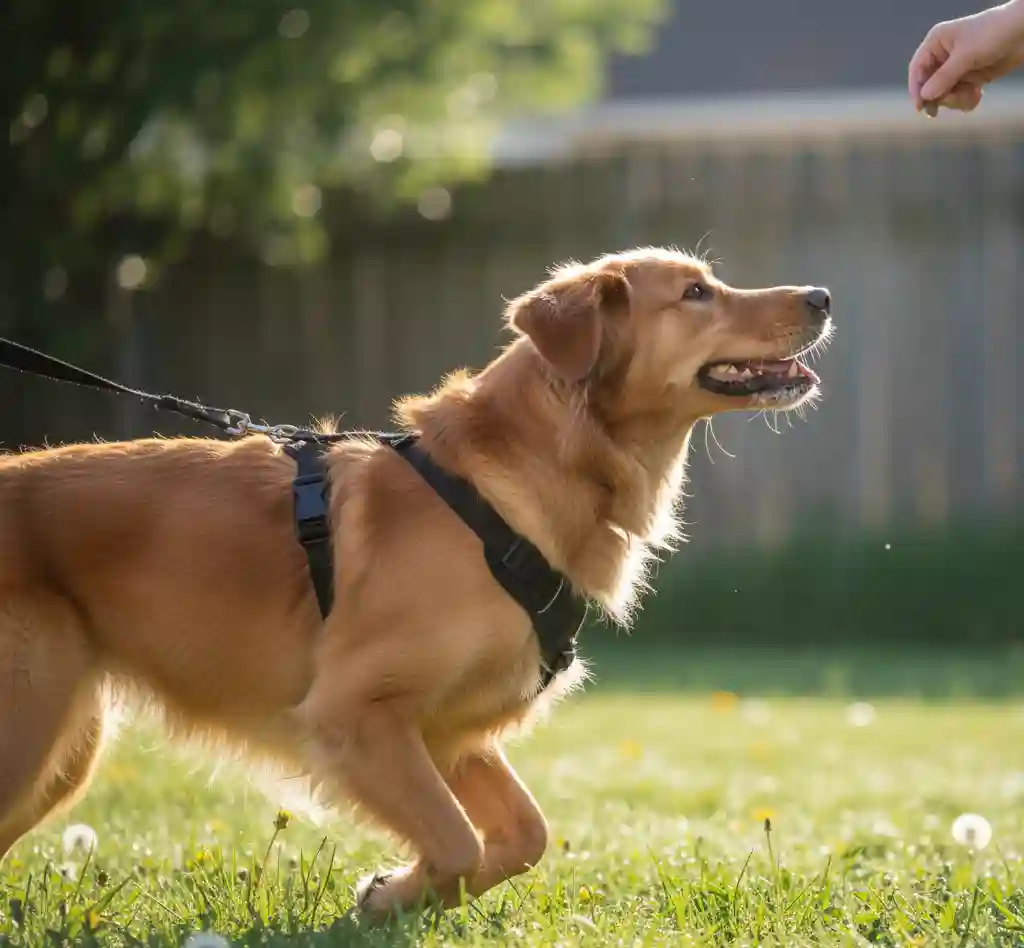
The Lure: Back away from the pile rapidly while holding the high-value treat at their nose level.
Step 3: The Jackpot Reward
-
When the dog follows you away from the pile (even just 3 feet), throw a “party.” Give them 3-4 pieces of the high-value treat consecutively.
-
Why this works: You are teaching the dog: “Pooping implies running to the human for steak,” rather than “Pooping implies turning around for a snack.”
Step 4: Immediate Cleanup
-
Put the dog inside the house immediately.
-
Return alone to clean the waste. If the yard is clean, the temptation is gone.
Step 5: Fade the Lure
-
After 2 weeks of success, stop showing the treat first. Say “Here!”, wait for the head turn, then produce the treat. This builds the behavioral reflex.
Mistakes to Avoid
-
Chasing the Dog: If you run toward a dog with poop in their mouth, they think it’s a game of “Keep Away.” They will swallow it instantly to win.
-
Using Hot Sauce/Chili: This is cruel and ineffective. Many dogs actually develop a taste for spicy food, or the pain causes gastric distress, leading to more accidents.
-
Assuming Nutritional Deficiency: While possible (malabsorption), most coprophagia is behavioral, not nutritional. Don’t switch foods randomly without a vet’s input.
-
“Rubbing Their Nose in It”: This archaic method only teaches the dog to fear you. It does not teach them what to do instead.
Frequently Asked Questions
Q: Why does my dog only eat frozen poop in winter?
A: This is often called the “Poopsicle” phenomenon. The change in texture and temperature makes the waste more novel and less repulsive to the canine senses. The training protocol remains the same.
Q: Can pineapple or pumpkin stop a dog from eating poop?
A: Anecdotally, yes. Pineapple contains bromelain, which may make stool taste bitter. However, scientific studies show these additives have a low success rate compared to behavioral training.
Q: Is it dangerous for my dog to eat their own stool?
A: Generally, eating their own stool is gross but harmless. However, eating the stool of other dogs or animals (cats, deer) is dangerous as it is a primary transmission vector for parasites like Giardia and worms.
Q: My dog is old. Can I still train this out of them?
A: Yes, but it takes longer. Senior dogs have a deeply ingrained habit loop. You may need to use the “Leashed Potty Break” method for 6-8 weeks instead of 3.
Manager’s Insight: The “Secret” Professionals Know
Here is the counter-intuitive truth: Attention is a reward.
I see so many owners screaming “DROP IT! YUCK! NO!” while waving their arms. To a bored dog, this is the most exciting thing that has happened all day. You have just turned a boring pile of waste into the center of the universe.
The best trainers are the quietest. If you miss the moment and they eat it, say nothing. Walk away. You lost that round. Screaming only adds anxiety to the mix. Save your voice for the “Recall” when they do it right.
Scientific References
-
Hart, B. L., et al. (2018). The paradox of canine coprophagia. Veterinary Medicine and Science.
-
Relevance: This is the definitive study showing that commercial “anti-coprophagia” products are only 0-2% effective, validating the need for training.
-
-
Boze, B. (2010). A comparison of common treatments for coprophagia in Canis familiaris. Journal of Applied Companion Animal Behavior.
-
Relevance: Compares behavioral modification vs. citronella collars.
-
-
Wells, D. L. (2003). Lateral bias and coprophagy in the domestic dog.
-
Relevance: Discusses the behavioral links in scavenging.
-