The “Science” Hook: Why Your Puppy Is a “Land Shark”
First, let’s debunk a myth: Your puppy is not “dominant,” “mean,” or “aggressive.” They are simply a baby mammal.
Biologically, puppies interact with the world through their mouths (oral fixation). More importantly, they are in a critical developmental window known as Acquired Bite Inhibition (ABI). In the litter, if a puppy bites a sibling too hard, the sibling yelps and stops playing. This feedback loop teaches the puppy to control the pressure of their jaw.
When they leave the litter and come to your home, you become the sibling. If you don’t teach them ABI now (between 8 and 16 weeks), they will grow into an adult dog with a dangerous “hard mouth.” This guide isn’t just about saving your fingers today; it’s about raising a safe dog for tomorrow.
Preparation List: The Anti-Bite Toolkit
To survive the teething phase, you need to be armed. Do not start training without these generic tools:
-
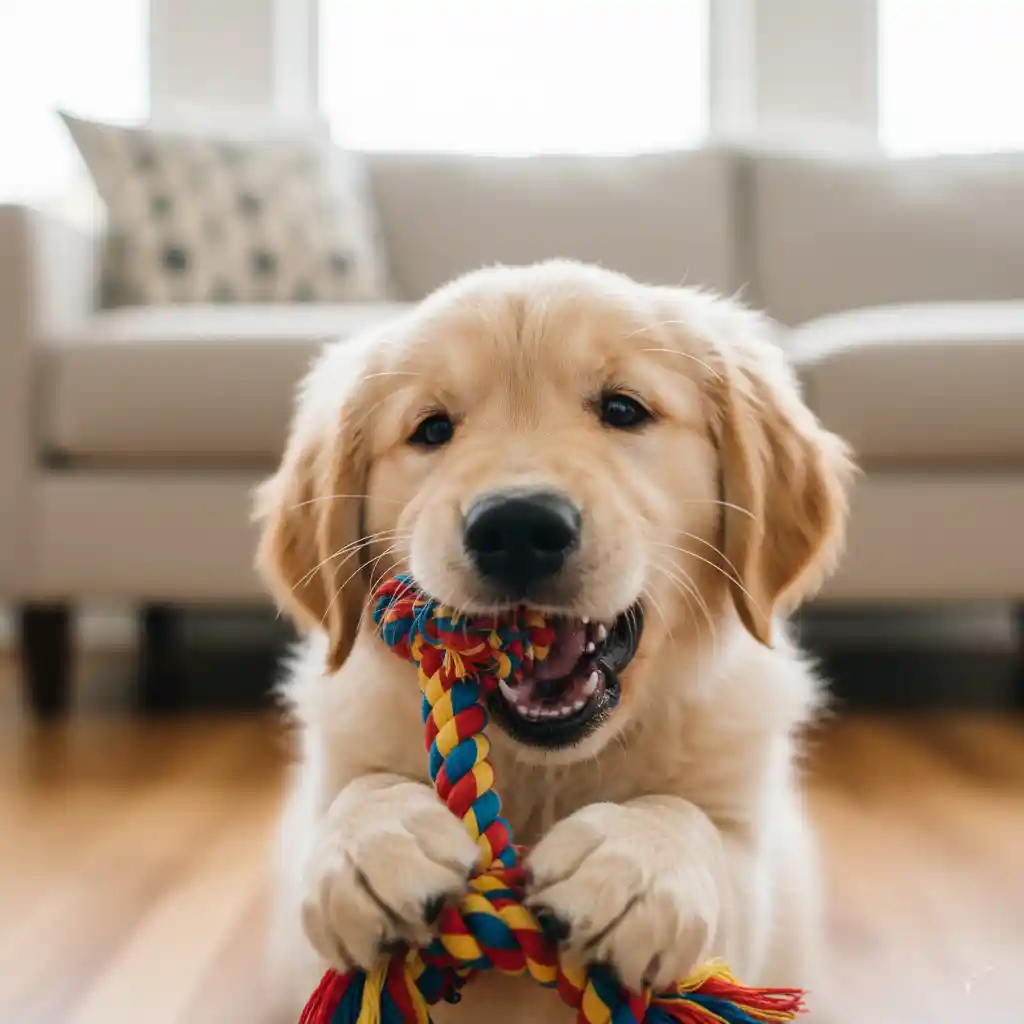
Long Tugging Toys: Ropes or fleece toys that are long enough to keep your hands away from their teeth during play.
-
Texture Variety Chews: Soft rubber (for soothing gums), hard nylon (for gnawing), and edible chews (bully sticks/yak cheese).
-
Taste Deterrent Spray: A generic bitter apple or cherry spray to apply to clothing (not the dog).
-
A “Drag Line”: A light, cheap leash to keep on the puppy indoors so you can control them without grabbing their collar (which often triggers a bite reflex).
The Method: 4 Steps to Curing the Nipping
Many owners fail because they only use “No!” We need to tell the puppy what to do, not just what not to do.
Step 1: The “Feedback” Signal
When teeth touch skin—even lightly—you must mark the behavior immediately.
-
Action: Let out a sharp, high-pitched “Ouch!” or a specific marker word like “Too Bad!”
-
Pro Tip: Do not scream or sound angry. High emotional energy often excites puppies more. You want to sound like a hurt littermate, not a scary monster.
Step 2: The “Freeze”
Immediately after the sound, become boring.
-
Action: Stop moving your hands. Cross your arms. Look at the ceiling.
-
Why: Puppies bite to solicit movement and play. If you become a statue, the biting loses its function.
Step 3: The “Redirection” (The Swap)
Once the puppy stops nipping for a second, offer the legal alternative.
-
Action: Shove a toy into their mouth. Wiggle it to make it “alive.”
-
Pro Tip: If they bite the toy, praise them verbally (“Yes! Good toy!”). You are teaching: Skin = Boring/Game Over; Toy = Fun/Game On.
Step 4: The “Reverse Time-Out” (If they persist)
If they ignore the toy and go for your skin again (the “Zoomies” state), you must remove access to the reward (You).
-
Action: Do not put the puppy in a crate (that creates crate hate). Instead, you leave the room. Step over a baby gate or close a door for 10-20 seconds.
-
The Lesson: “My teeth on human skin makes the human disappear.” This is the strongest punishment in the dog world: social isolation.
Mistakes to Avoid
-
Holding the Muzzle Shut: Never grab your puppy’s mouth to clamp it shut. This creates “hand shyness” and can make the puppy defensive or aggressive later in life.
-
Playing “Hand Wrestling”: Do not use your bare hands to ruffle their face or push them away. To a puppy, moving hands look like prey. Always use a toy as a buffer.
-
Yelling or Physical Discipline: Hitting a puppy for biting destroys the bond and creates fear. Fear leads to real aggression.
-
Expecting Overnight Results: Bite inhibition is a biological process. It takes weeks of consistency, not days.

Frequently Asked Questions
Q: My puppy growls when they bite. Is this aggression?
A: Likely no. This is usually “play growling.” High-pitched, bouncy growling combined with a loose body is normal play behavior. Real aggression involves stiffening, freezing, and a deep, guttural sound.
Q: Why does my puppy attack my ankles when I walk?
A: This is a herding or prey drive instinct. Moving feet look like small animals. Stop moving (freeze) when they bite. Once they stop, redirect to a toy. Do not run; running makes you “prey.”
Q: At what age does the biting stop?
A: The intense “Land Shark” phase usually peaks between 10-14 weeks and starts to subside around 5-6 months when the adult teeth settle in.
Q: Should I use a spray bottle with water?
A: I do not recommend it. Some dogs love water (it becomes a game), while others become afraid of you holding objects. It addresses the symptom, not the cause.
Scientific References
-
Dunbar, I. (1996). After You Get Your Puppy. (The foundational text on Acquired Bite Inhibition).
-
Overall, K. L. (2013). Manual of Clinical Behavioral Medicine for Dogs and Cats. (Differentiation between play biting and aggression).
-
Blackwell, E. J., et al. (2008). The relationship between training methods and the occurrence of behavior problems. (Efficacy of positive reinforcement vs. punishment).