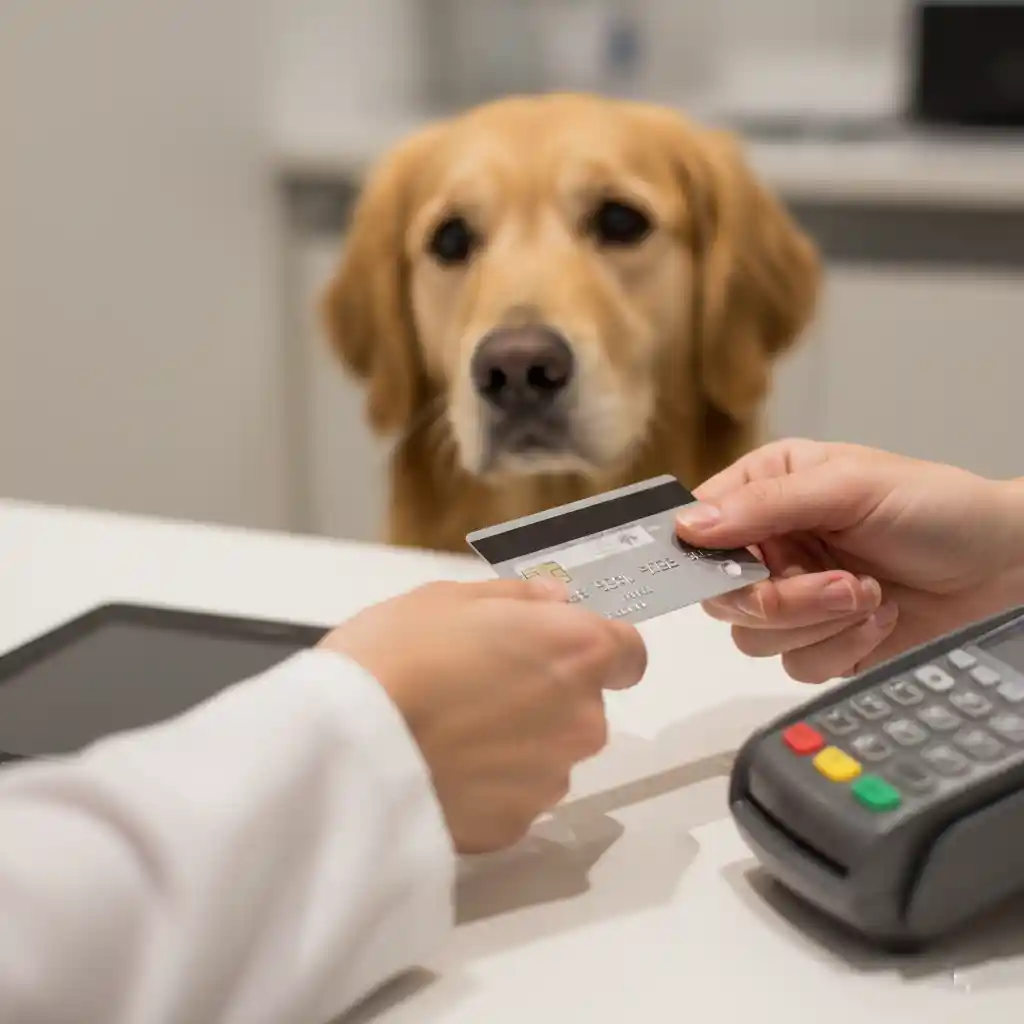
Let’s be honest. Nobody likes going to the vet.
Your dog hates it. Your wallet hates it. And frankly, it feels like a transaction. You walk in with a healthy dog, the vet listens to their heart for 30 seconds, gives a shot that costs $40, and you walk out $300 poorer.
For years, I thought: “My dog is fine. He eats, he poops, he plays. Why am I paying for someone to tell me he’s a ‘good boy’?”
I read the top 5 articles on “Essential Dog Care.” They all parrot the same line: “Prevention is key!” “Vaccines save lives!”
I think they are missing the real point.
The real reason you go to the vet isn’t for the shots. In fact, I’d argue that vaccines are the least important part of that appointment.
So, why do I now religiously pay that $300 bill?
Because I learned about the “Baseline” and the “Insurance Trap.”
The “Adversarial” View: Vaccines vs. The Silent Killer
Let’s challenge the standard advice.
Contradiction #1: “You need boosters every year.”
My Counter-point: Do you? Immunology doesn’t expire on a calendar.
Many vets are moving away from yearly boosters for core vaccines (Distemper/Parvo). They last 3 years or more.
My Experience: instead of blindly shooting my dog with chemicals, I ask for a Titer Test. It measures immunity levels. Yes, it costs money, but it’s science, not guesswork. If your vet pushes shots without asking about lifestyle, push back.
Contradiction #2: “If he looks healthy, he is healthy.”
My Counter-point: Dogs are liars.
Biologically, dogs are predators, but they are also prey. In the wild, if you show weakness, you die. So, they hide pain. They hide nausea.
By the time your dog looks sick (stops eating, lethargic), the disease is usually Stage 3 or 4.
The annual visit isn’t about fixing a sick dog; it’s about catching a number on a spreadsheet before the dog even knows he’s sick.
Case Study: The “Perfectly Healthy” Golden Retriever
Let me tell you about “Cooper.”
Cooper was 7. He played fetch. He ate his dinner. He looked perfect.
His owner, Mike, wanted to skip the annual exam to save money for a vacation. “He’s fine,” Mike said.
I convinced Mike to go, specifically to get a Senior Blood Panel.
Mike was annoyed at the $200 extra charge.
The Result:
Cooper’s Creatinine levels (Kidney marker) were slightly elevated. Not “Failure” levels, just… high.
Because we caught it early, we switched his diet to a renal support formula (low phosphorus).
Six months later? His levels dropped.
If Mike had waited until Cooper stopped eating (about 2 years later), his kidneys would have been 75% destroyed. That $200 blood test saved Mike roughly $5,000 in emergency hospitalization.

The $300 Gamble vs. The $5,000 Disaster
Is the annual exam a money grab? Or is it the cheapest insurance policy you can buy?
| Feature | Skipping the Visit (Reactive) | The Annual Exam (Proactive) |
| Cost | $0 (Today) | ~$200 – $300 (Today) |
| Diagnosis Timing | When the dog collapses (Stage 4). | Before symptoms appear (Stage 1). |
| Treatment Cost | $3,000 – $8,000 (Emergency Surgery/ICU). | $50 – $100/month (Diet/Meds). |
| Insurance Impact | Claim Denied. (No history = Pre-existing). | Claim Approved. (Documented history). |
| Outcome | High mortality risk. | Managed condition, long life. |
| My Verdict | Financial Suicide. | The smartest investment. |
The “Insurance Trap” You Didn’t Know About
This is the part that really scares me.
If you have pet insurance, read your fine print.
Most policies have a clause: “Claims will be denied if the pet has not had a documented wellness exam in the last 12 months.”
Think about that.
You could be paying your monthly premiums for years. But if you skip one annual checkup because “he looked fine,” and then he tears his ACL next month?
The insurance company can refuse to pay the $5,000 surgery bill.
They will argue: “How do we know this wasn’t a pre-existing condition? You didn’t see a vet last year.”
My Experience is this: The annual exam is your Paper Trail. It is legal proof that your dog was healthy on [Date]. Without it, you are vulnerable.
Manager’s Insight: Be The Boss of the Appointment
Expert Summary
So, is the vet trying to upsell you? Maybe.
Should you buy every supplement and shampoo they suggest? Probably not.
But here is my advice: Go to the appointment, but change the agenda.
Don’t go for the shots. Go for the Data.
-
Ask for bloodwork: “I want a CBC and Chem panel.”
-
Check the teeth: “Do we need a cleaning before his heart is affected?”
-
Lump Check: “Can you map these bumps?”
You are the client. You are hiring the vet as a consultant. Use their brain, not just their needles. That is how you get your money’s worth.