SAFETY WARNING: Growling is communication, but biting is danger. If your older dog is significantly larger than the puppy and has a history of aggression towards other dogs, or if they are shaking/shaking the puppy, separate them immediately and hire a professional behaviorist. Do not let them “work it out.”
It’s Not Jealousy, It’s a “Routine Riot”
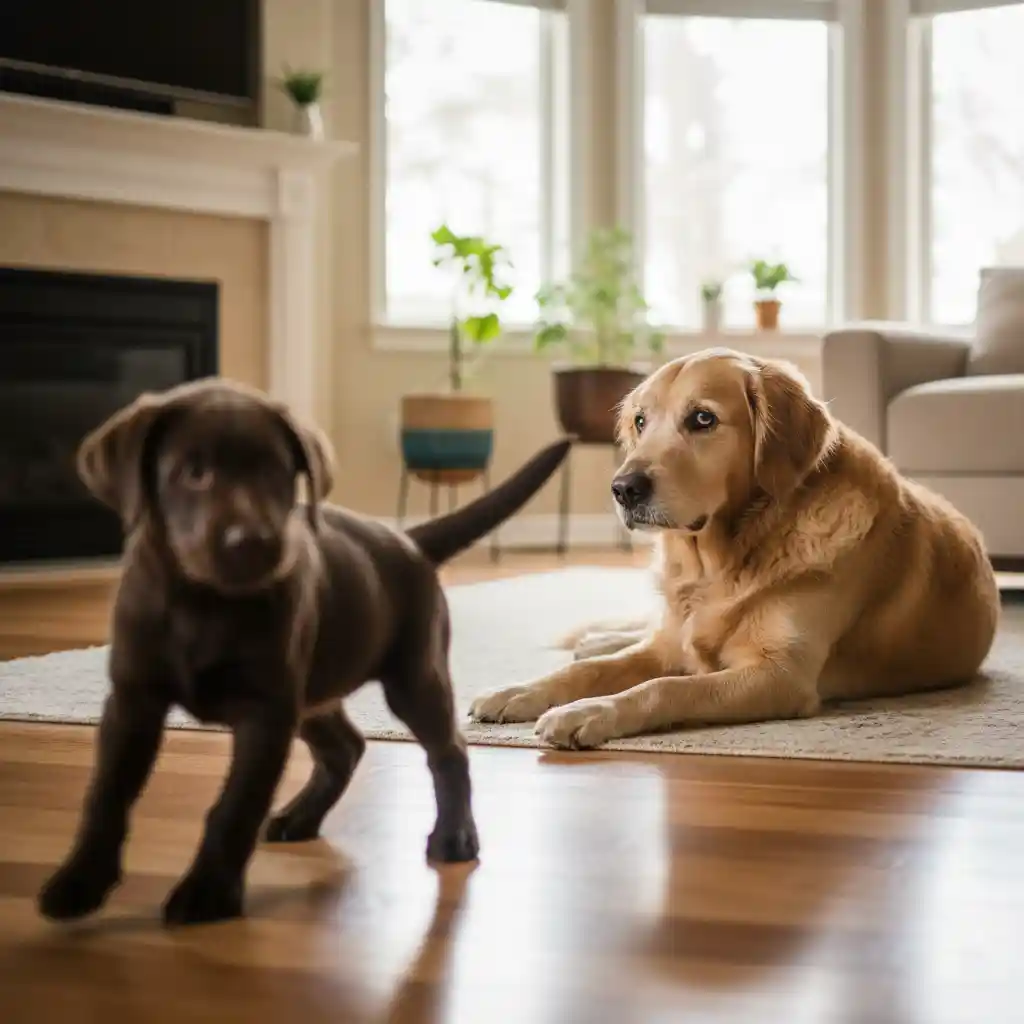
You imagined them cuddling on the dog bed, but instead, your sweet older dog is hiding under the sofa or baring their teeth at the new fluffball. You feel guilty, thinking you’ve ruined your older dog’s life.
First, take a deep breath. This is normal.
From your older dog’s perspective, you haven’t brought home a “brother”; you’ve brought home a chaotic, sharp-toothed intruder who disrupts their sleep, steals their toys, and monopolizes your attention.
The stress hormone (Cortisol) levels in your home just spiked. To fix this, we need to stop forcing “friendship” and start building “tolerance.”
Is My Older Dog Being Mean or Just Teaching?
Puppies are rude. They lack social manners. Sometimes, an older dog needs to correct them. You must learn to tell the difference between a healthy correction and dangerous aggression.
| Behavior | Healthy Correction (Good) | Dangerous Aggression (Bad) |
| Sound | A low guttural growl or a sharp, single bark. | Continuous snarling, high-pitched screaming, or silence (the “freeze”). |
| Contact | An “Air Snap” (biting the air near the puppy) without contact. | Punctures, shaking the puppy, or pinning them down without letting up. |
| Aftermath | The older dog moves away to decompress. | The older dog continues to hunt/stalk the puppy. |
| Puppy’s Reaction | Puppy pauses, backs off, or shows a “submissive belly.” | Puppy screams in pain or is too terrified to move. |
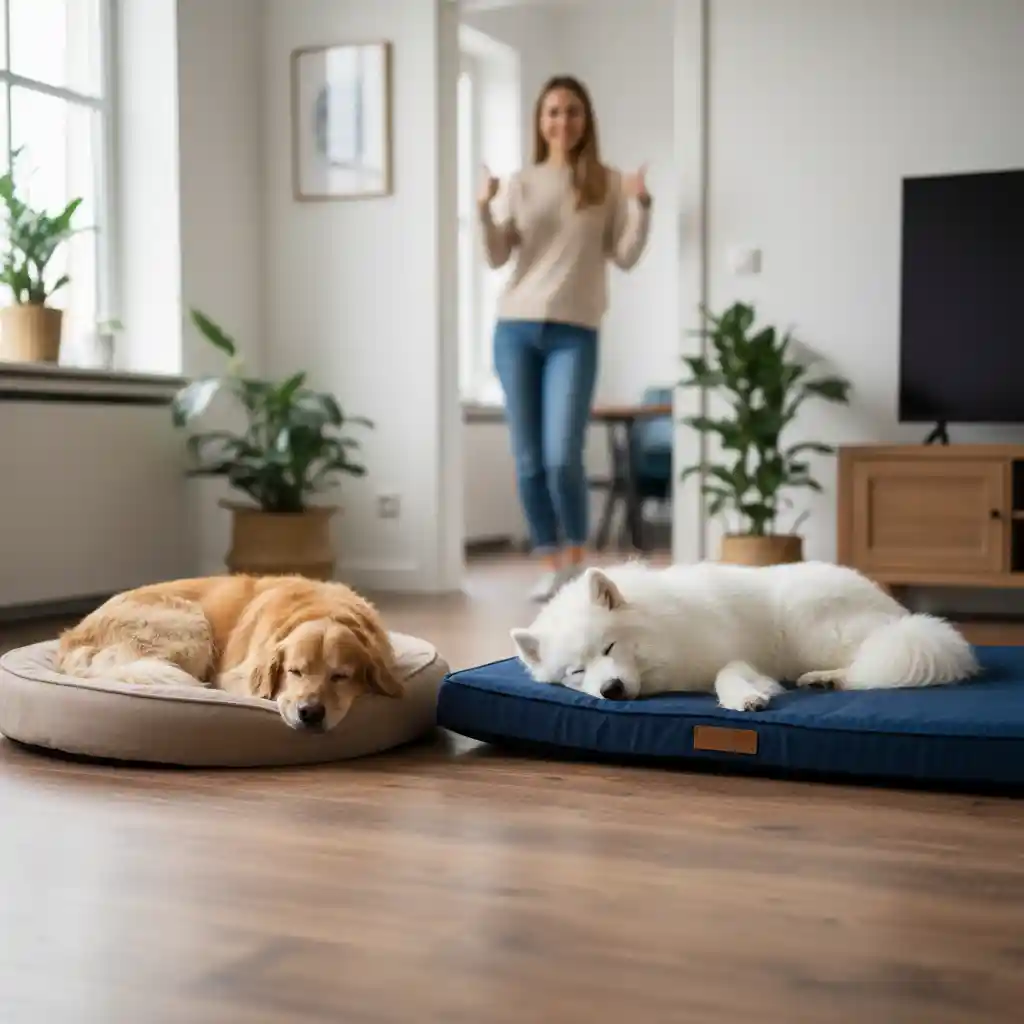
The Solution: The “Slow Merge” Method
Do not just throw them in the living room together. We need to associate the puppy with good things, not annoyance.
Step 1: The Neutral Ground (Parallel Walk)
-
Action: Meet outside in a neutral area (park or street), not your house. Have two handlers.
-
Method: Walk the dogs parallel to each other, about 10 feet apart. Do not let them touch.
-
Goal: They get used to each other’s scent and presence while moving forward. Walking releases tension.
Step 2: Gate Management (The “Safe Zone”)
-
Inside the House: Use baby gates to separate them 100% of the time when you aren’t training.
-
Why: The older dog needs a “Puppy-Free Zone” to sleep. If your puppy is in the “Land Shark” phase (see our guide on [Stopping Puppy Biting]), they will harass the older dog relentlessly. You must protect your senior.
Step 3: The “3-Second Rule” Interactions
-
Action: Allow short, supervised sniffing sessions (3 seconds max).
-
Intervention: Before the puppy gets too excited and jumps on the older dog’s head, call the puppy away.
-
Reward: Treat the older dog heavily for staying calm.
-
Context: This prevents the older dog from feeling the need to snap. You are advocating for them.
Step 4: Managing Resources
-
Critical Rule: Never feed them side-by-side yet. Food bowls and high-value toys are flashpoints for conflict.
-
Internal Link: If you notice your dog stiffening around food, read our detailed guide on [How to Stop Resource Guarding] before progressing.
Frequently Asked Questions
Q: Why does my older dog ignore the puppy completely?
A: This is actually a good sign! It’s called “avoidance.” Your dog is choosing to walk away rather than fight. Respect this choice. Do not force them to play. They are observing the new arrival from a distance.
Q: Should I punish my older dog for growling at the puppy?
A: NO. Growling is a warning signal (like a smoke alarm). If you punish the growl, the dog learns: “I can’t warn, so next time I will just bite.” If they growl, simply remove the puppy. The growl means “I need space.”
Q: How long until they are friends?
A: The “Rule of 3”:
-
3 Days to decompress.
-
3 Weeks to learn the routine.
-
3 Months to feel at home.
Do not expect them to be best friends immediately. Coexistence is the first goal; friendship is a bonus.
Manager’s Insight: The “Puppy License” Expires
Here is a biological fact many owners miss: The “Puppy License.”
For the first few weeks (until about 4 months old), adult dogs often tolerate rude behavior from puppies because they smell like babies. They give them a “free pass.”
However, once the puppy hits adolescence (5-6 months), that license expires. The older dog will suddenly start correcting them more harshly. This is normal.
Your job is to be the referee. Don’t let the puppy bully the senior. If you don’t stop the puppy, your older dog will have to do it for you, and you might not like how they do it.