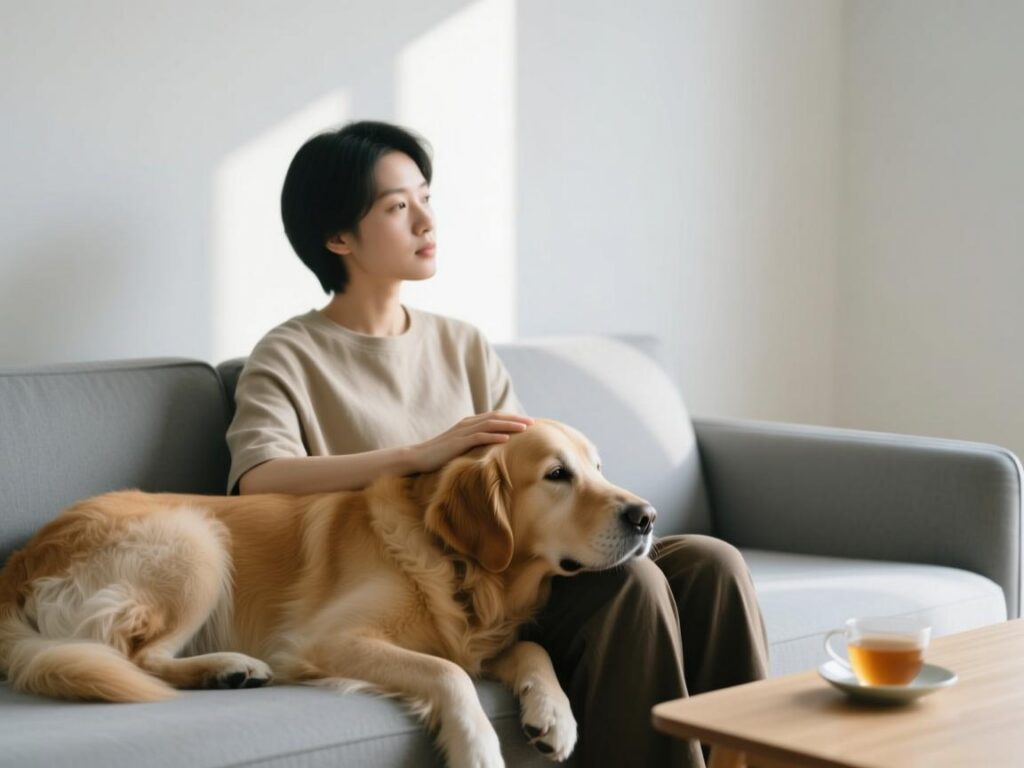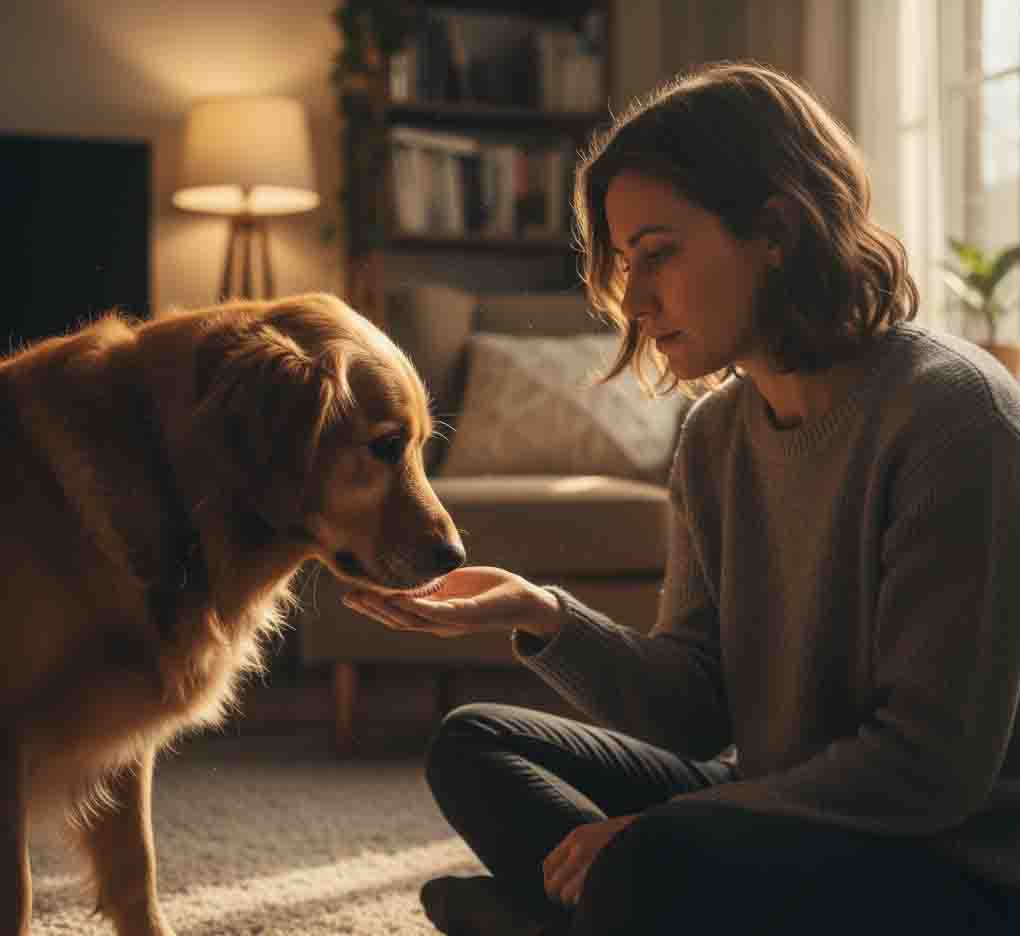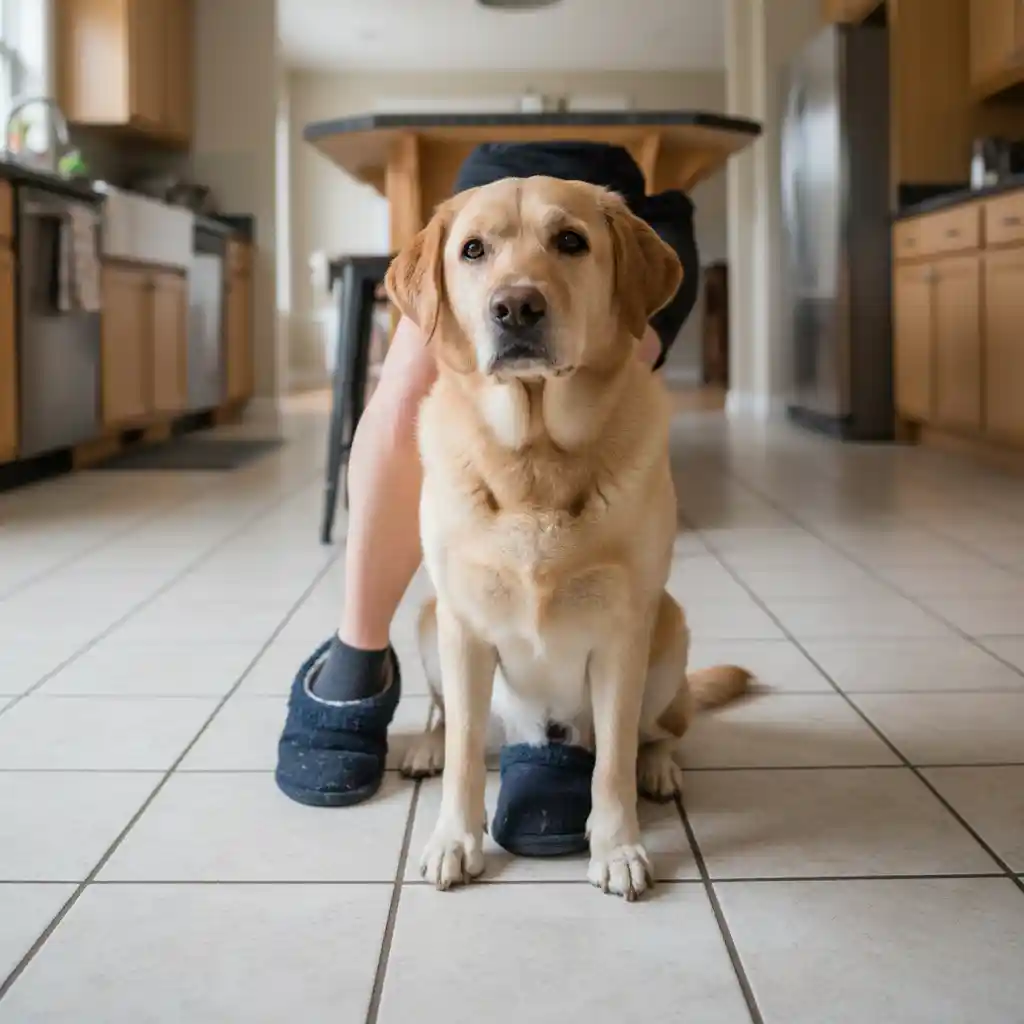
I walked into the bathroom today. I closed the door. Two seconds later, I saw a nose shove its way under the crack. Then came the whine.
Does this sound familiar?
We call them “Velcro Dogs.” They are our shadows. They are under our desks while we work, at our feet while we cook, and tripping us when we turn around.
If you search online, most articles will tell you: “Aww, it’s because he loves you! It’s a pack instinct!”
I think that’s only half the truth. And honestly? I think it’s the dangerous half.
After managing dog behavior content for six years, I’ve realized something uncomfortable. Often, this isn’t about love. It’s about anxiety. Or worse, it’s about control.
The “Adversarial” View: Love vs. FOMO
I read through the top advice on this topic. They usually list three reasons: genetics (herding dogs), history (rescue trauma), or affection.
But they miss the biggest driver. FOMO (Fear Of Missing Out).
In my experience, many “Velcro Dogs” aren’t scared you’ll leave. They are scared you’ll do something fun without them. Or, they view you as a high-value resource (like a bone), and they are “guarding” you by staying close.
Ask yourself this:
Does your dog follow you because they feel unsafe without you?
Or do they follow you because they are a micromanager who needs to know exactly what the “Manager” is doing?
The difference matters. One needs comfort. The other needs boundaries.
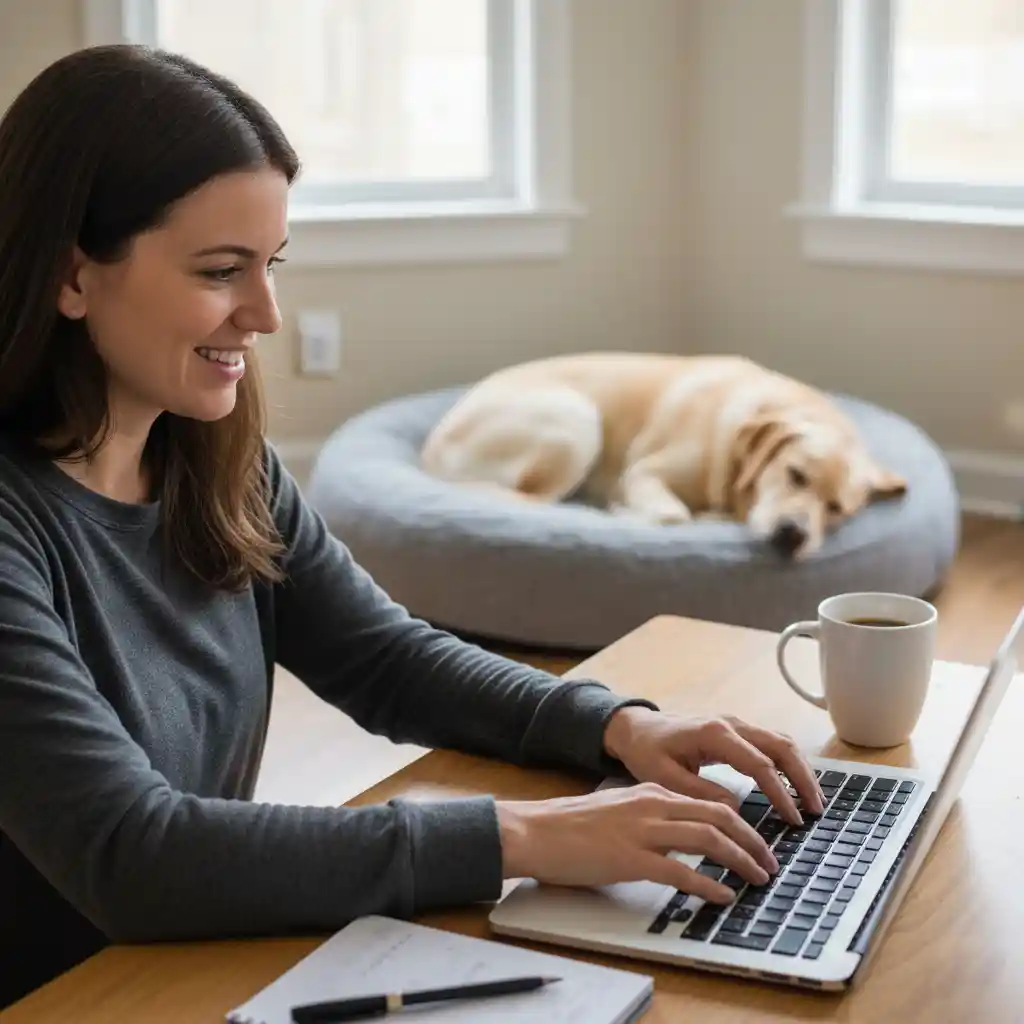
“Velcro” vs. Separation Anxiety: They Are Not the Same
This is the biggest confusion I see in client emails. “My dog has separation anxiety because he follows me to the kitchen.”
Not necessarily. Separation Anxiety happens when you leave. Velcro behavior happens when you are staying.
| Feature | Velcro Dog (Hyper-Attachment) | Separation Anxiety (Isolation Distress) |
| The Trigger | You moving from room to room. | You grabbing your keys/leaving the house. |
| The Behavior | Silent following, lying on your feet, watching you. | Destruction, howling, pacing, drooling, escaping. |
| When You Leave | Might actually be totally fine and just sleep. | Goes into a full-blown panic attack. |
| The Motivation | “I want to be part of the action.” | “I am terrified of being abandoned.” |
| My Verdict | Annoying but manageable. | Medical emergency. |
Case Study: The Story of Barnaby
Let me tell you about a real case. Barnaby was a 2-year-old Goldendoodle.
Barnaby’s owner, Sarah, loved that he was a cuddler. “He just loves me so much,” she told me. But then she tripped over him while carrying a pot of boiling pasta. That wasn’t cute anymore.
The Observation:
I watched them for an hour. Every time Sarah stood up, Barnaby shot up from a dead sleep. He wasn’t looking at her with “love.” He was looking at her with hyper-vigilance. His ears were pricked. He was scanning.
The Diagnosis:
Barnaby wasn’t cuddling. He was patrolling. He had appointed himself Sarah’s bodyguard. This job was stressing him out. He could never truly sleep because he had to monitor Sarah’s every move.
The Fix:
We didn’t punish him. We simply “fired” him from his job.
We taught him the “Place” command. When Sarah went to the kitchen, Barnaby was told to stay on his mat.
The result? After two weeks, Barnaby started sleeping deeper. He realized: “Oh, she can go to the fridge without me dying. Cool.”
How to Reclaim Your Personal Space
If you are tripping over your dog, you need to create an “Invisible Bubble.” It’s not mean; it’s healthy.
Step 1: The “Boring” Walk
Walk around your house aimlessly. Go from the living room to the kitchen, then back. Do this for 5 minutes.
-
The Reaction: Your dog will follow you confusedly.
-
The Trick: Do not look at them. Do not talk to them. Be incredibly boring.
-
The Goal: Eventually, your dog will realize you aren’t doing anything interesting (no food, no walks) and will stop following.
Step 2: The Bathroom Boundary
Start closing the door.
-
If they whine or scratch, wait.
-
Do not open the door until there is 3 seconds of silence.
-
If you open the door while they are whining, you just taught them: Whining = Open Sesame.
Step 3: Reward Distance
This is the one everyone forgets.
If you look over and your dog is lying on their bed in the other room?
Walk over and give them a treat.
Teach them that being independent gets rewarded. Usually, we only pay attention to them when they are under our feet. Flip the script.
Manager’s Insight: The Hard Truth
Is It The Dog… Or Is It You?
Here is my controversial take: We create Velcro Dogs because it feeds our ego.
In a world where work is stressful and dating is hard, coming home to a creature that literally cannot exist without us feels good. It feels like we are needed.
I’ve caught myself doing it. My dog was sleeping in the sun, and I called him over just because I wanted a cuddle. I interrupted his peace for my own validation.
If we want confident dogs, we have to be confident owners. We have to be okay with our dogs choosing to sleep in the other room. It doesn’t mean they don’t love us. It means they feel safe enough to not watch our every move.
That, in my opinion, is the ultimate compliment.
Scientific References
-
Parthasarathy, V., & Crowell-Davis, S. L. (2006). Relationship between attachment to owners and separation anxiety in pet dogs. (Challenging the link between “velcro” behavior and actual anxiety)
-
Topál, J., et al. (1998). Attachment behavior in dogs (Canis familiaris): A new application of Ainsworth’s (1969) Strange Situation Test
-
Schwartz, S. Separation anxiety syndrome in dogs and cats. JAVMA. (Differentiation of symptoms)